
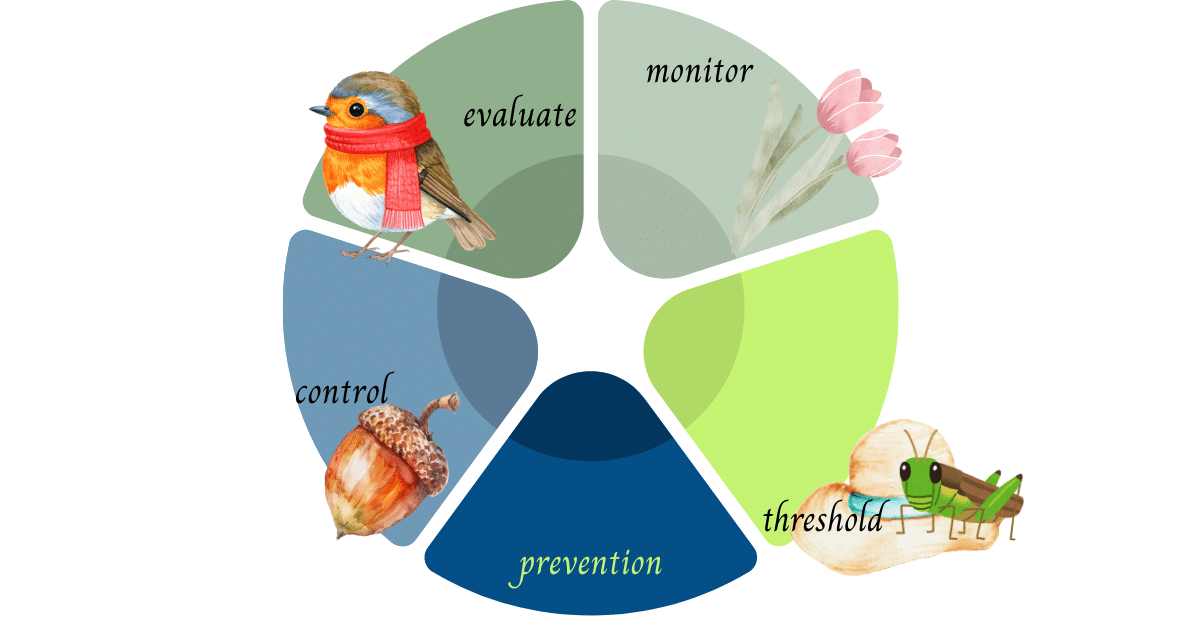
Rounding Up What We Know
What we learned so far about IPM (Integrated Pest Management) begins to come together. Part V is the transition from learning IPM to living, it’s a steady rhythm you can return to season after season.
IPM is an ecosystem-based strategy that focuses on long-term prevention of pests or their damage through a combination of techniques such as biological control, habitat manipulation, modification of cultural practices, and use of resistant varieties. UC IPM
It’s also the step many gardeners skip, even though it’s the one that builds confidence and reduces the feeling of being overwhelmed. This is where you stop viewing your garden as a list of problems and begin seeing it as a living, interconnected system.
This final step is about reflection, pattern‑spotting, and a little bit of course‑correction. It’s about noticing what your garden is telling you and responding with what you know works for you. And most importantly, it’s about giving yourself grace. IPM is not perfection. It’s awareness.
Why You Want to Read This Now
This article is your bridge from learning to living. It’s where IPM becomes second nature — not a checklist, but a rhythm. You’ll see how each season offers its own opportunities to observe, intervene, and reflect. Whether you’re just starting or refining your practice, this guide helps you stay grounded and proactive, not reactive.
📌 Your Year‑Round IPM Rhythm

Part V: Reflect, Reset, Repeat
Integrated Pest Management is cyclical by nature. Each season offers its own opportunities to observe, intervene, and reset. When you understand the rhythm, you stop feeling behind and start feeling aligned.
Spring: Prepare & Prevent
Spring is your launchpad. Everything you do now sets the tone for the rest of the year.
What to focus on:
- Refresh mulch to stabilize soil moisture and reduce weed pressure.
- Check irrigation lines for clogs, leaks, or uneven distribution.
- Scout early and often — tiny issues are easiest to correct now.
- Install sticky traps or visual monitoring tools.
- Revisit your planting plan with diversity in mind.
- Apply preventative treatments only when needed and always with purpose.
Why it matters:
Spring pests escalate quickly in South Florida’s warmth. Early attention prevents summer overwhelm.
📌 Spring: Prepare & Prevent

Summer: Observe & Adjust
Summer is your most active IPM season; not because you’re doing more, but because the garden is peaking.
What to focus on as you view the garden:
- Use your worksheet to track patterns — time of day, weather, plant stage.
- Introduce beneficial insects when appropriate.
- Prune for airflow to reduce fungal pressure.
- Remove diseased leaves promptly and dispose of them properly.
- Use spot treatments and physical barriers to stay ahead of outbreaks.
Why it matters:
Summer is where gardeners often feel reactive. Your goal is to stay observant, not overwhelmed.
📌 Summer: Observe & Adjust

Fall: Clean & Transition
Fall is your reset button — a chance to clear the slate and prepare for healthier growth.
What to focus on:
- Remove spent plants and sanitize tools.
- Solarize or sheet mulch areas with recurring issues.
- Plant cover crops or prepare beds for rest.
- Review your notes, photos, and patterns from the year.
- Adjust next year’s plan based on what you learned.
Why it matters:
Fall cleanup is one of the most powerful IPM tools you have. It breaks pest cycles before they restart.
📌 Fall: Clean Up & Transition
Winter: Plan & Rebuild
Winter is quieter, but it’s not idle. This is your strategic season.
What to focus on:
- Review your IPM records — what patterns emerged?
- Research new varieties, cultivars, or strategies.
- Repair or upgrade infrastructure: netting, trellises, irrigation, raised beds.
- Rest. Soil needs rest. Gardeners do too.
Why it matters:
Winter reflection is what transforms experience into wisdom.
Your One‑Page Seasonal Rhythm Chart
Use this printable chart as your compass throughout the year.
| Season | Focus | Actions & Reminders |
|---|---|---|
| Spring | Prepare & Prevent | Mulch, scout early, plan diversity, purposeful action |
| Summer | Observe & Adjust | Weekly scouting, beneficials, prune, spot treat |
| Fall | Clean & Transition | Remove debris, solarize, cover crop, reflect |
| Winter | Plan & Rebuild | Review notes, research, repair, rest |
Section 4 — Worksheet Download Section
To help you apply what you just learned, here’s the worksheet for this part of the series. It’s a simple, reflective space to pause, look back at the season, and capture what your garden has been teaching you.
Inside, you can quickly note:
- What worked well — and what didn’t
- Patterns you noticed while monitoring
- Pests, beneficials, and weather shifts that shaped your results
- Adjustments you want to make next season
- One or two clear goals to guide your next steps
Print it, slip it into your garden journal, and revisit it whenever you need clarity. These small reflections become one of the most reliable tools in your IPM practice.
Download the IPM Part 4 Worksheet

Download the IPM Part V Worksheet (PDF)
For a quick list of problems most likely to happen and sorted for you by season use this link below. (If you use these links let me know in the comments how it works out for you.)
Download the IPM V Pest by Season List
Further Reading
- University of Florida IFAS Extension — IPM Principles
- UC IPM — Seasonal Pest Management
- Xerces Society — Beneficial Insects Guide
- ATTRA Sustainable Agriculture — IPM Planning Tools
- South Florida Gardening Network — Local insights and seasonal tips
Confidence Builder: You’re Not Behind
IPM is not a race. It’s a rhythm.
Some seasons are messy. Some pests surprise you. Some plants struggle despite your best efforts. That’s okay. You’re building awareness, not perfection. Every note you take, every pattern you notice, every gentle intervention — that’s IPM. That’s success.
You’re already doing the work.
What’s Next: Spring Planting Guide
What’s Next for You: Spring Planting Guide
With the rhythm of IPM in hand, you’re ready to step into the season that starts us all going again. Spring is the moment when observation becomes action, and—as Anne Dudley Bradstreet reminds us—its sweetness is shaped by what came before. (If you don’t know her, she was America’s first published poet and a daily gardener.) The next guide will walk you through the full spring planting process: preparing beds, choosing the right plants for our own gardens conditions, and making the best setting for new plants.
It’s a detailed companion meant to be used year after year, giving you the confidence to begin the season with purpose and ease. Think of it as your practical roadmap into spring’s renewal, grounded in the same thoughtful awareness you’ve built throughout this IPM series.
Happy Digging,
Jane
Further Reading
A curated selection of trusted, research‑based resources for deeper learning.
These are sources I’ve come to rely on, and I hope they serve you just as well.
- IPM Florida
A Florida‑specific overview of IPM principles, monitoring techniques, and environmentally responsible control options. - University of California Statewide IPM Program — “The Basics of IPM”
A concise, highly visual introduction to the IPM decision‑making process, thresholds, and long‑term prevention strategies. - Integrated Pest Management for Floriculture and Nurseries — Larry L. Strand
A foundational book offering detailed examples of scouting, thresholds, and intervention strategies used in professional horticulture.