
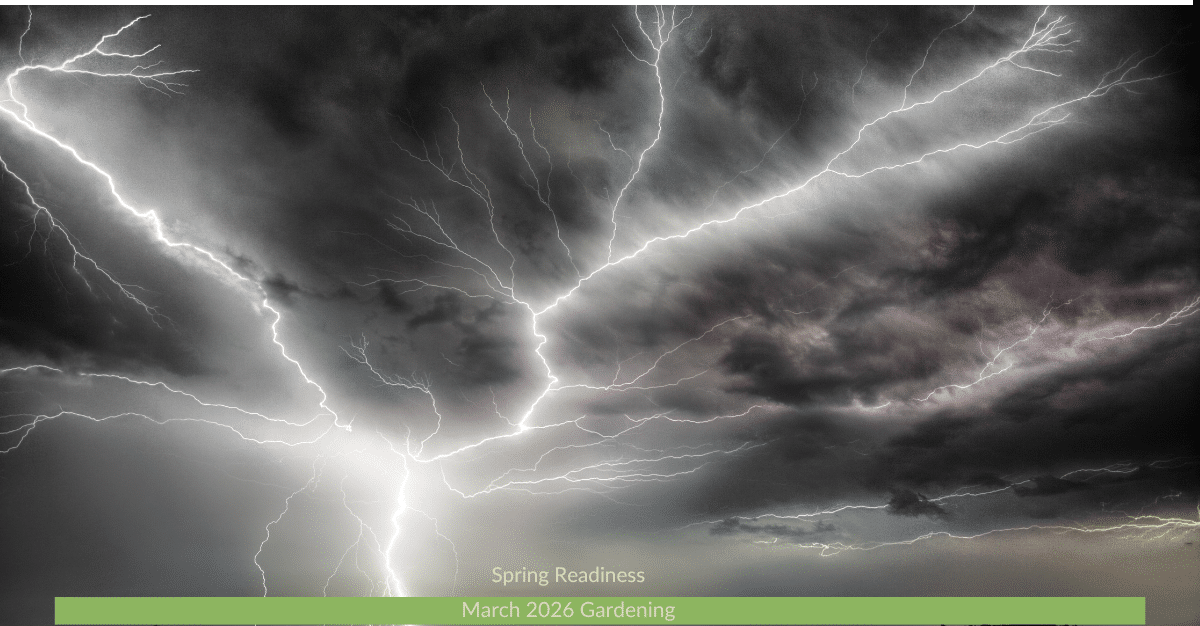
Spring Readiness for the Summer to Come
Introduction
Summer storms arrive with a kind of suddenness that catches even experienced gardeners off guard. One moment the sky is bright; the next, wind bends branches, rain sheets sideways, and the garden becomes a moving, shifting landscape. Whether you live on the Gulf Coast, the Atlantic coast, the Midwest, or anywhere storms intensify in summer, the pattern is the same: wind, water, and saturated soil test your garden’s resilience.
Storms aren’t just weather events — they’re ecological forces. And the choices you make long before a storm determine how well your garden weathers one.
This guide gives you the science, the strategy, and the calm confidence to prepare your garden for summer storms — including a dedicated Florida spotlight for those in hurricane‑prone regions.
📌 Urgent Garden Protection Basics

Why You Want to Read This
If you’ve ever wondered:
- Why do some trees fall while others stay standing?
- How does wind actually damage plants?
- What should I do before a storm — and what should I never do?
- How do I help my garden recover afterward?
- What’s different about hurricane‑prone regions like Florida?
…this article gives you the clarity you need.
You’ll learn:
- The science behind wind and water damage
- How soil saturation affects root stability
- How to prepare your garden before storms arrive
- How to choose wind‑resistant plants
- What to do after a storm to help your garden recover
- What’s normal vs. what’s concerning
- Florida‑specific guidance for hurricane country
📌 Protect Your Garden From High Winds

1. How Wind Damages Plants (The Science)
Wind affects plants in three main ways:
Mechanical Stress
Branches twist, bend, or snap. Trees with weak branch unions or poor pruning history are most vulnerable.
Uprooting
Key insight: Healthy, well‑rooted plants withstand wind dramatically better than stressed ones.
2. How Water Damages Plants
Storms bring more than wind — they bring prolonged saturation.
Soil Saturation
Roots need oxygen. When soil stays waterlogged, roots suffocate.
Root Rot
Water molds (oomycetes) thrive in saturated soil. This leads to wilting, yellowing, and sudden collapse.
Erosion
3. Why Some Plants Survive Storms Better
Storm‑resilient plants share traits like:
- Flexible branches
- Deep, wide root systems
- Strong wood density
- Upright, compact growth habits
- Ability to shed wind (not catch it)
Trees with brittle wood or shallow roots are more likely to fail.
Preparing Your Garden Before Storm Season
1. Start With Healthy Trees
Trees are the biggest risk — and the biggest asset.
- Prune for strong structure
- Remove crossing or rubbing branches
- Avoid lion‑tailing (over‑thinning the canopy)
- Check for decay, cavities, or fungal conks
- Hire certified arborists for major work
Healthy trees survive storms. Unhealthy trees become hazards.
2. Improve Soil Drainage
Storms reveal drainage problems you didn’t know you had.
- Add organic matter
- Use raised beds
- Avoid compacted soil
- Keep gutters and downspouts clear
- Direct water away from foundations
Good drainage is storm insurance.
3. Secure or Move Containers
📌 Stop Water & Flood Damage

Potted plants become projectiles in high winds.
- Move them indoors or into garages
- Lay large containers on their sides
- Group smaller pots together in sheltered areas
4. Clean Up Potential Projectiles
Storm winds turn loose objects into hazards.
- Garden tools
- Decorative items
- Furniture
- Trellises
- Hanging baskets
A quick sweep makes a big difference.
5. Turn Off Irrigation Before a Storm
📌 24‑Hour Garden Storm Prep

Soil will be saturated enough. Extra water increases the risk of root rot and uprooting.
Florida Spotlight: Gardening in Hurricane Country
Florida faces the strongest, most frequent storms in the U.S. Here’s what matters most in hurricane‑prone regions:
Choose Wind‑Resistant Trees
UF/IFAS research highlights top performers:
- Live oak
- Gumbo limbo
- Bald cypress
- Sabal palm
- Simpson’s stopper
- Southern magnolia
Avoid High‑Risk Trees
- Australian pine
- Ficus
- Queen palm (shallow roots)
- Laurel oak (short lifespan + decay issues)
Plant Trees in Groups
Clusters of 3–5 trees protect each other and reduce wind load.
Buy Trees With Healthy Roots
Avoid circling or girdling roots — they fail in storms.
Pre‑Storm Checklist (Florida Edition)
- Remove coconuts and loose palm fronds
- Bring in all containers
- Lay large pots on their sides
- Turn off irrigation
- Clear storm drains
- Prune dead or weak branches
After the Storm
- Upright toppled trees within 24–48 hours
- Remove mulch to let soil dry
- Document damage
- Don’t fertilize stressed plants
- Prune only what’s broken
Florida gardens can be incredibly resilient — with the right preparation.
For more Florida specific advice from two Master Gardeners who have been throught some fierce named storms read this.
Storm Prep Checklist for Summer
Summer storms can sweep in quickly, shifting from calm to wind and heavy rain in moments. This guide helps you prepare with confidence and return to your garden with care once the weather clears.

A simple, printable starter kit:
Before the Storm
- Prune for structure
- Improve drainage
- Secure containers
- Clean up loose items
- Turn off irrigation
- Check gutters and downspouts
During the Storm
After the Storm
- Assess hazards first
- Upright toppled plants
- Remove broken branches
- Let soil dry before watering
- Avoid fertilizing stressed plants
- Stay indoors
- Avoid windows
- Do not attempt garden work
Conclusion
Storms are part of summer — but damage doesn’t have to be. When you understand how wind and water affect your garden, you can prepare with confidence, protect what you’ve built, and help your landscape recover with calm, steady steps.
What Comes Next?
After a month of preparing for summer storms, we’re shifting into something lighter — a reminder that the year isn’t only about protecting what you’ve built, but also about seeking beauty wherever it blooms.
Next week, we travel far from hurricane season and into a landscape designed for calm beauty
We will visit the Dutch, the water experts and explore for the month, the concept of Water Wisdom.
A water‑wise garden listens to water — slowing it, storing it, and celebrating it.
Your Dream Trip Along the Tulip Trail
A gentle, color‑soaked guide to the Netherlands’ most iconic spring route — where fields stretch into stripes of pink, red, and gold, small towns wake up with the season, and the entire landscape feels like a deep breath after months of weather‑watching.
You’ll explore:
- the brightest tulip fields and quietest photo spots
- how to time your visit for peak bloom
- the small towns and canals that make the journey feel timeless
- simple, slow‑travel tips for enjoying the trail without rushing
It’s the perfect counterbalance to March’s intensity — a reminder that resilience isn’t only about surviving storms, but also about making space for beauty, color, and renewal.
Happy Digging
— Jane
Further Reading
- UF/IFAS: Wind-Resistant Tree
- NOAA Hurricane Preparedness
- American Society of Consulting Arborists: Tree Risk Basics
- Soil Drainage & Stormwater Management
- Designing Resilient Landscapes in Coastal Regions