

The Garden of the Costa del Sol
SMALL GARDENS – BIG IMPACT
May, 25 2026 · In The Garden
- How Estepona Spain Turned Itself Into a Garden

Introduction
On Spain’s Mediterranean coast, Estepona has transformed itself into a walkable garden city. The streets are lined with painted pots, balconies overflow with bougainvillea, and large‑scale botanical murals rise above the rooftops. At the edge of the old town, the Orchidarium’s glass domes create a striking botanical landmark — a soaring space of orchids and water that anchors the town’s garden identity. It’s a place where art, plants, and shade shape the experience of moving through it.

Terracotta pots and geraniums in a traditional patio
Why You Want to Read This
This guide gives you a clear sense of Estepona — not just what to see, but how the town works and why it feels so different. You’ll understand its transformation into a garden city, follow a walking route through the old town, learn the scale of its botanical identity, and see how it connects to Spain’s patio tradition and the Dutch hofje. You’ll also discover what to explore next, whether you’re visiting for a day or staying longer.
What Makes Estepona Special
Estepona’s beauty is intentional, coordinated, and community supported. Its identity rests on several pillars that work together to create a walkable, plant‑forward environment.
Painted Pot Streets Hundreds of streets participate in a coordinated pot program. Each lane has its own color palette — blue, turquoise, terracotta, pink — creating visual identity and helping visitors navigate.
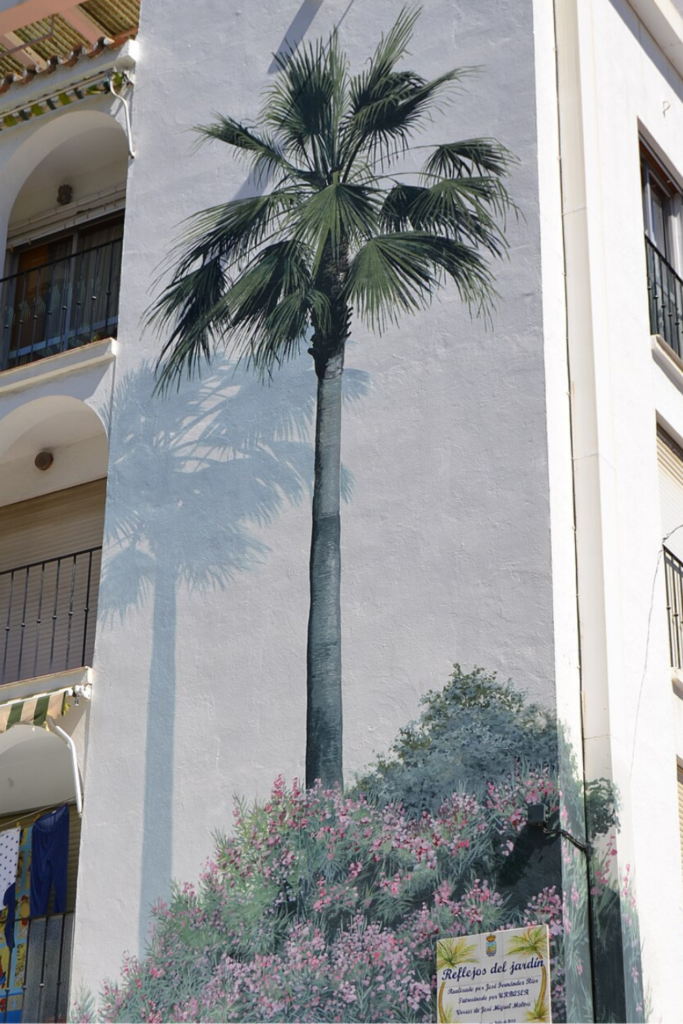
Botanical Murals The Murals District features large botanical and nature‑themed murals that climb entire building facades, adding structure and interest even in the hottest months.
Plaza Culture Plaza de las Flores anchors the old town with orange trees, benches, and a fountain. Smaller plazas act as cool, shaded garden rooms.
The Orchidarium Estepona’s botanical centerpiece holds more than 3,000 plant species, including over 1,500 orchids, under three glass domes surrounding a dramatic indoor waterfall. In 2024 it welcomed more than 54,000 visitors — its highest year yet — and has now surpassed half a million total visits since opening in 2015.
Estepona by the Numbers
These statistics help readers understand the scale of Estepona’s garden identity.
- 500,000+ total Orchidarium visits since opening
- 54,000+ visitors in 2024
- 48,000+ visitors in 2023
- 3,000+ plant species, including 1,500+ orchids
- Three glass domes defining the skyline
- A 15,000 m² green‑lung park surrounding the Orchidarium
- Peak visitation in April, aligning with orchid bloom season
How Estepona Became a Garden City


Estepona’s transformation is the result of long‑term planning and community participation. Daily watering routes maintain pots and balconies. Seasonal replanting keeps color fresh year‑round. Color‑coded streets create identity and orientation. A growing murals program adds new botanical art annually. The Orchidarium anchors the “Garden of the Costa del Sol” initiative, tying the whole system together.
Estepona’s murals extend the garden idea onto its walls, blending botany, culture, and scale. The tall palm mural introduces the city’s vertical greenery, while the music‑and‑flowers piece adds intimate detail to older lanes. Farther along, the large bird mural and the surrounding façades painted in blues and greens expand the theme across entire buildings. Together, these works turn everyday streets into an open‑air botanical gallery and prepare visitors for the layered sense of place that defines the old town.
Estepona’s garden identity is also shaped by where it sits on the Costa del Sol. The town lies on the western edge of Málaga province, in a region defined by coastal light, mild winters, and a long tradition of horticulture. This location supports the palms, bougainvillea, succulents, and subtropical species that appear throughout the old town and in the Orchidarium’s surrounding park.

Estepona sits on the western edge of the region along the Mediterranean coast
A Sense of Place
Walking Estepona feels like moving through a series of outdoor rooms: blue‑pot streets with geraniums and balconies, terracotta lanes with bougainvillea arches, pink‑pot alleys with succulents and trailing vines, the Murals District rising above you, and small plazas acting as shaded garden rooms. The scent of jasmine, the sound of water, and the coolness of narrow lanes deepen the experience.
Walking Tour: Estepona Old Town

The starting point for exploring the old town’s garden streets
Plaza de las Flores is the natural starting point for exploring Estepona’s garden streets. The square is framed by orange trees, flowering planters, and small cafés, creating a cool, shaded gathering place at the heart of the old town. From here, the walking route branches into the color‑coded lanes that define Estepona’s identity as a garden city.
If you are a traveling gardener like me, you are asking youreself, “where are the good places to eat around this plaza?” Here are some good ideas from Trip Advisor you might want to look at if you go to Spain.
Start: Plaza de las Flores
Begin in Plaza de las Flores, the town’s living room. Orange trees, benches, and a central fountain set the tone: shaded, calm, and made for lingering. From here, slip into the narrow lanes that radiate outward — each one marked by its own pot color and plant palette.
Blue‑Pot Streets
Walk north along Calle Terraza, where blue pots and geraniums line the walls in rhythmic rows.
Turquoise & Pink Lanes
Turn into Calle Real, a pedestrian spine filled with small shops and cafés. The pots shift to turquoise and pink, and balconies begin to layer in bougainvillea, jasmine, and trailing vines.
Terracotta Arches & Garden Rooms
Continue toward Calle Aurora, where terracotta pots and bougainvillea arches create one of the most photographed corridors in town. This lane opens into a sequence of small plazas — Plaza Begines, Plaza Ortiz, Plaza Blas Infante — each one a shaded garden room with benches, planters, and a different mood.
The Murals District
Angle west into the Murals District, where entire building facades bloom with botanical and nature‑themed art. The scale changes here: tall walls, long sightlines, and murals that anchor the neighborhood even in the hottest months.
Return to the Center
Loop south toward Calle Villa, one of the prettiest streets in the old town. Pink pots, whitewashed walls, and a gentle slope lead you back toward the center.
If you saw polka dot pots in this story (or on your trip) you did not halucinate! You like me may have painted a few pots in your time, but if you have painted them in lavender polka dots please use the comments below. I need to know about it! Each street in Estepona has a color plan and I found polka dots in several colors. Here they are in lavender if you don’t believe me.

Estepona, Spain
The Orchidarium: The Botanical Heart of Estepona
After the walk, readers arrive at the Orchidarium — a striking glass structure with three domes, a dramatic 17‑meter waterfall, and thousands of orchids arranged along elevated walkways. Inside, the air shifts to tropical humidity, and rare species bloom on their own schedules, sometimes for only a few hours. The Orchidarium has become one of Estepona’s most visited attractions, with record‑breaking attendance in 2024, and it anchors the town’s identity as a true garden city.
Inside, the light shifts again — softer, filtered through the glass domes.

Moisture, airflow, and filtered light create ideal orchid condition
The Orchidarium’s waterfall shows how water, height, and airflow work together to support tropical species. The falling water cools the space, raises humidity, and creates pockets of moving air—conditions orchids rely on in the wild. Visitors see how structure and microclimate design can turn an enclosed space into a thriving garden, offering lessons that carry into the streets outside.
What Estepona Teaches Us About Garden Design
Estepona is a model for warm‑climate towns — including Florida — because it shows how to create beauty without excessive water use. Containers control water and reduce waste. Heat‑tolerant plants thrive with minimal irrigation. Shade structures protect plants and people. Color becomes a design tool. Murals keep streets vibrant even in the hottest months.
Lifestyle: Visiting or Living in Estepona
Estepona is a small town committed to growth paired with a pleasant environment. If you enjoy patio‑garden walks, there are plenty more choices: a mural walk, a sculpture walk, a poetry tour, miles of exercise spaces, and beaches galore. You can view Gibraltar and, on a clear day, see North Africa while eating fresh, varied food.
Healthcare is considered reliable. An International School serves the 25% of residents who are expats. More than 80% of recent population growth comes from new international residents.
There are a few cons: traffic, construction, and challenging parking. (Smart visitors learn to use the low‑priced underground garage at the town hall.) But overall, Estepona offers modern comforts, reasonable prices, unpretentious accommodations, and a lifestyle surrounded by art, culture, beauty, and health. And as a white‑ and pink‑sand Floridian — the beaches don’t look rocky at all.
Conclusion: Patios, Hofjes, and Estepona’s Garden Rooms
Estepona’s old town functions like a series of open‑air patios — small, shaded, planted rooms that invite you to slow down. Spain’s patio tradition and the Netherlands’ hofjes share the same idea: beauty, community, and coolness created through enclosed, human‑scaled spaces. Estepona blends these traditions into a walkable garden town, where every lane feels like a patio and every plaza feels like a shared garden. It’s a place to wander, to notice, and to return to.
Up Next
Summer arrives early in our gardens — long before the calendar says it’s here. June’s first article kicks off a new series on preparing plants, soil, and ourselves for the heat ahead. We’ll look at the quiet tasks that make the biggest difference: strengthening roots, managing moisture, choosing the right bloomers, and setting up shade before the sun turns serious. A gentle, practical guide to keeping the garden thriving through the hottest months
Quick Answers
Happy Digging,
Jane
1. 📌 ESTEPONA — THE TOWN THAT TURNED ITSELF INTO A GARDEN
2. 📌 FLOWER ROUTES & MURALS OF ESTEPONA’S OLD TOWN
3. 📌 HOW ESTEPONA CREATED ITS FAMOUS “GARDEN OF THE COSTA DEL SOL”
4. 📌 BEST STREETS & PATIOS TO SEE IN BLOOM IN ESTEPONA
Photo Credits
3Streets: August Dominus, CC0, via Wikimedia Commonsicenses,
Harald Johnsen, CC BY 2.0, via Wikimedia Commons
Palms: Tschubby, CC BY‑SA 3.0, via Wikimedia Commons
Tyk, CC BY-SA 4.0, via Wikimedia Commons
Dots Turista Inglesa, CC BY-SA 4.0 via Wikimedia Commons
Waterfall: Emilio J. Rodríguez Posada, CC BY-SA 2.0, via Wikimedia Commons
Further Reading
A curated selection of trusted, research‑based resources for deeper learning:
- Spain’s patio culture (Córdoba Tourism Board; Andalucía.org)
- Mediterranean garden design (Mediterranean Garden Society; Architectural Foundation)
- Container gardening in warm climates (Mediterranean Garden Society; Houzz Mediterranean Patio Collection)
- Costa del Sol small towns (Costa del Sol Tourism Board)
- Estepona tourism pages for mural routes, sculpture walks, poetry tours, and Orchidarium hours
- Dutch hofjes (Hofjes Heritage Foundation)
The starting point for exploring the old town’s garden streets