
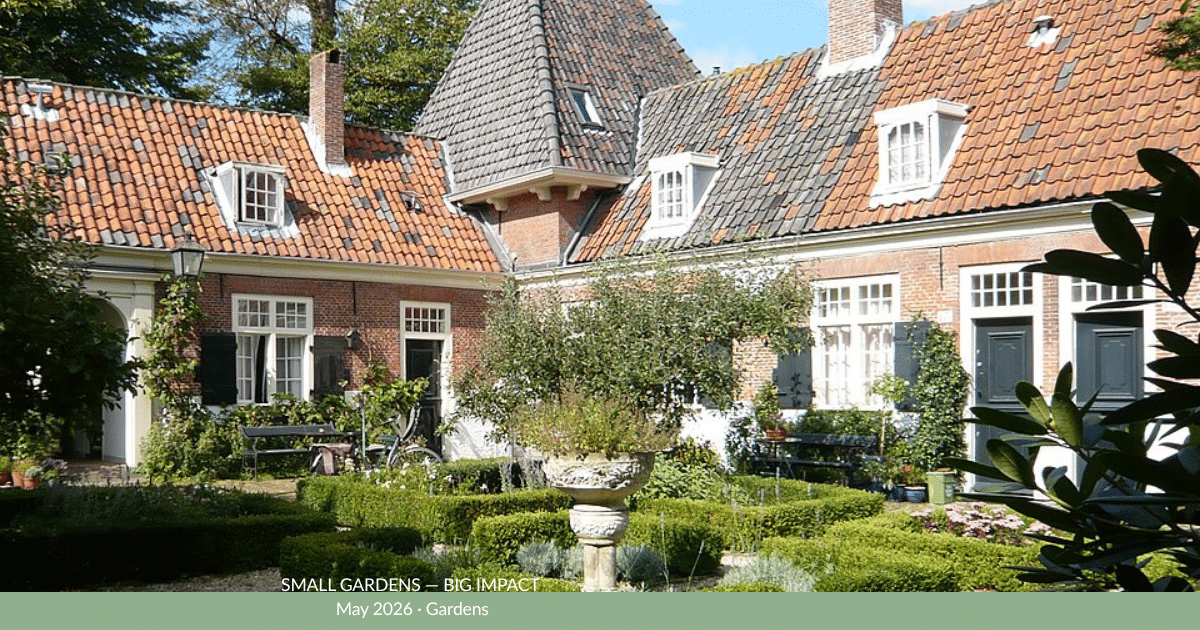
How thoughtful design makes small gardens feel spacious
SMALL GARDENS – BIG IMPACT
May, 4 2026 · In The Garden
- Designing Intimate Small Gardens
- The Hofjes of Holland: Courtyard Gardens of Care, Community and Medieval Charity
- Spanish Patio Gardens: Small-Space Lessons from Andalusia
- How Estepona Spain Turned Itself Into a Garden
Introduction
Small gardens have a kind of magic that large landscapes can’t always match. They feel intimate, intentional, and deeply personal—more like outdoor rooms than open yards. In the hofjes of the Netherlands, I learned how powerful a small, enclosed space can be: every plant has a purpose, every view is considered, and every corner invites you to pause. These courtyard gardens, first created in the Middle Ages, are still thriving today—a remarkable testament to the strength of their design.
And the lessons these historic spaces offer aren’t limited to Europe.
That same logic works beautifully in our own gardens, especially here in Florida, where shade, structure, and year‑round planting can turn even the smallest space into a sanctuary. Whether you’re working with a courtyard, a side yard, a patio, or a pocket garden, the principles remain the same: clarity, simplicity, and thoughtful layers. Understanding why small gardens feel so powerful gives us the foundation for designing them well, which leads naturally to the core elements that make these intimate spaces succeed.
All of this leads to a simple truth about small gardens:
Why This Topic Matters
Small gardens succeed when intention replaces size. In tight spaces, every choice carries more weight: the structure, the shade, the circulation, and the planting layers all work harder and more visibly. When these elements are handled well, a small garden becomes not just functional but deeply expressive — a place that feels complete, coherent, and personal.
And because every element is so visible, the impact of good design is immediate — you feel it the moment you step inside.

Haarlem, The Netherlands
“In a small garden, every choice is a design decision.”
Table of Contents
Introduction
I. What Makes a Small Garden Work
- Function
- Design
- Inspiration
- Structure
- Layers
- Focal Points
- Movement
II. Eleven Principles of Small‑Garden Success
III. A Simple 5‑Step Planning Method
IV. Case Studies in Small‑Garden Design
- The Micro‑Space
- The Small‑but‑Livable Garden
- The Challenging Side Yard
V. Florida Tips for Small Spaces
- North Florida
- Central Florida
- South Florida
VI. Conclusion
I. What Makes a Small Garden Work
Function
Every element should serve a purpose. Seating, shade, privacy, and circulation matter more when space is limited.
Design
Strong shapes, clear structure, and a cohesive palette keep the space calm and intentional.
Inspiration
Borrow from history, travel, and your own preferences. Small gardens shine when they reflect the gardener.
Even the smallest gardens can hold more than one mood, so here are two real‑world moments that show how a compact space can offer both a place to dine and a place to rest.

Shade creates intimacy and comfort in the smallest spaces.

Proof that even a tiny table can feel abundant and welcoming.
Both spaces show how atmosphere, enclosure, and small‑scale planting can turn even the tiniest corner into a place you want to linger.

Grouped pots act like a mini‑garden, adding depth even in the tightest spaces.
Once you understand these functional and aesthetic foundations, the next step is seeing how they translate into the principles that shape a successful small garden. And here in Florida—where light, heat, and humidity shift throughout the year—these ideas become even more powerful, helping you choose plants and structures that thrive in our changing microclimates.
In Florida, that awareness becomes even more valuable, because our seasonal rhythm shapes what will truly thrive in heat, humidity, and shifting microclimates.
Florida Regional Gardening, North, Central and South.
II. Eleven Principles of Small‑Garden Success
Start With a Clear Purpose
Choose one or two core intentions—relaxation, pollinators, herbs, morning coffee—and let them guide every decision.
Keep the Layout Simple
One strong organizing shape (circle, rectangle, diagonal) anchors the design and prevents visual clutter.
Use Strong Structure
Small gardens need bones: hedges, trellises, screens, pergolas, or sculptural plants that create rhythm and enclosure.
Create Layers, Not Crowds
Use three heights—tall, medium, low—to build depth without overwhelming the space.
Borrow Views Beyond Your Fence
Align sightlines toward neighboring trees, rooftops, or sky to visually expand the garden.
Choose a Cohesive Color Palette
Limit your palette to one dominant color family with one accent. Repetition creates harmony.
Use Focal Points Wisely
One strong focal point gives the garden structure and calm. Small spaces don’t need competing attention.
Add Vertical Interest
Go upward with vines, trellises, tall grasses, or wall‑mounted planters to stretch the space visually.
Low, textural groundcovers like Asiatic jasmine can anchor a small garden and make the space feel intentional.
Create Movement and Rhythm
Repeat shapes, colors, and textures to guide the eye forward. Rhythm sets the pace; movement is how you experience it.
Edit Ruthlessly
Every plant and object must earn its place. Editing is the secret to small‑garden serenity.
Make It Personal
Use your favorite plants, containers, and colors. This is your sanctuary—design it for yourself.
III. A Simple 5‑Step Planning Method
These principles become even more effective when paired with a simple, structured planning process.
Measure Your Space
Sketch the footprint, note sun patterns, and mark utilities and doors. Break irregular shapes into manageable sections. Precision matters.
Define Your Needs
List what the garden must do—privacy, herbs, seating—and prioritize the top two.
Survey the Site
Observe wind, drainage, noise, and existing views. Identify what to hide and what to highlight. Use graph paper, a tape measure, and photos for accuracy.
Choose Your Layout
Prioritize vertical space, use compact plant varieties, and limit colors for cohesion. Containers and raised beds add structure and convenience.
Plan Your Views
Decide what you want to see from indoors, from seating, and from the entry. Place focal points accordingly. Think in foreground, middle ground, and background.
IV. Case Studies in Small‑Garden Design
Seeing these concepts in action makes them easier to apply.
Case Study #1 — The Micro‑Space
A 6×10 Balcony with One Strong Idea
A tiny balcony becomes a garden by choosing a single focal point — one tall, sculptural container with an architectural plant. A few matching bowls of herbs and a slim bench keep the space unified and calm.
Design lesson: Editing creates serenity. One strong idea is enough.
Small balconies succeed when they feel like real rooms, not leftover outdoor space — and this tiny corner shows how comfort, enclosure, and one strong focal point can completely change the experience

Even the tightest balcony can become a calm, enclosed retreat with just a few thoughtful choices.
A Place to Sit
A small balcony works best when you treat it like an indoor room with outdoor materials. Start by creating a clear focal point — here, the chair and cushion — and then build gentle enclosure around it. The mirror expands the view and doubles the greenery, the lattice softens the edges, and the rug signals comfort underfoot. Together, these elements turn a narrow footprint into a place you naturally want to sit, read, or simply breathe for a moment.
Layering a few well‑chosen plants is what gives a small balcony its softness and sense of life. A tall planter adds height and screens the view, the pedestal urn brings a touch of formality, and the low foliage near the chair keeps the space feeling grounded. You don’t need many plants — just a mix of heights and textures that create a gentle frame around the seating. This is what turns a simple chair on a balcony into a place that feels intentionally designed.
Even the smallest balcony can feel complete when every element supports one simple, intentional idea.
And while a tiny balcony shows what one strong idea can do, a slightly larger space opens the door to a different strategy — using vertical surfaces to build richness and atmosphere.
Case Study #2 — The Small‑but‑Livable Garden
In a slightly larger garden, the walls become just as important as the floor — and using them well can turn an ordinary patio into a lush, layered room filled with color and personality.
A 12×20 Townhome Garden with a Purpose
A narrow townhome garden works because it commits to one primary function: outdoor dining. A compact table near the door, a simple layered border along the fence, and a small raised bed for herbs keep the space useful without feeling crowded.
Design lesson: Purpose leads the design. Once you choose the main function, everything else falls into place.

A small fountain adds movement, sound, and a sense of cool enclosure.

A simple grid turns a plain surface into a vertical garden with personality.
A vertical garden doesn’t have to be complicated to make an impact — the turquoise wall shows how simple repetition can transform a plain surface into a lively backdrop. By keeping the pots identical and the spacing consistent, the wall becomes a pattern rather than a collection of individual plants. The color contrast does the heavy lifting, and the small windows break the grid just enough to keep the composition interesting. This is the easiest way to add height, rhythm, and personality to a small or mid‑size space.
More Vertical Ideas
The green ivy fountain wall takes the same idea — using vertical surfaces — and pushes it into a more atmospheric direction. Instead of repetition, it relies on layering: climbing plants soften the architecture, foliage spills over ledges, and the fountain becomes a quiet focal point that anchors the space. This approach works when you have a bit more room and want the garden to feel immersive and enclosed. It shows how vertical planting can shift from decorative to architectural, turning a simple courtyard into a cool, intimate room.
Vertical planting doesn’t just save space — it turns walls into living architecture that shapes the whole garden.
Case Study #3 — The Challenging Small Garden
A difficult narrow side yard becomes an intentional garden walkway by embracing its constraints — using dwarf trees for height, soft foliage for texture, and a simple stepping‑stone path to guide the eye.
Design lesson: Constraints are design prompts. Work with the site, not against it.

A simple raised bed keeps the planting organized and the space easy to maintain.

The open‑cell pattern supports drainage while keeping the walkway green and usable.
Narrow Side Yard
A narrow side yard becomes usable when you treat it like a small outdoor hallway: clean lines, clear edges, and a simple planting palette. Stone pavers set in gravel create a crisp, modern path that feels intentional rather than leftover. A raised bed along one side adds structure and gives the plants a defined stage, keeping the space tidy and easy to maintain. This approach works when you want a side yard to feel finished, walkable, and visually calm.
Porous Pavers for Runoff
When a narrow yard also struggles with stormwater, porous pavers solve two problems at once. The open‑cell pattern allows rain to soak directly into the ground instead of rushing toward the house or pooling against the fence. Grass or groundcover can grow through the openings, softening the look while keeping the surface stable underfoot. This is the best choice when drainage is the priority but you still want a green, functional passageway.
Even the tightest side yard can work beautifully when you choose a layout that solves its specific challenge.
And after seeing how constraints shape small gardens, it’s refreshing to remember that even the simplest corner can become a meaningful place to work or pause.

Even a simple table and chair can create a moment of purpose in a compact garden.
V. Florida Tips for Small Spaces
Small gardens succeed when the design matches the space — and in Florida, the climate adds another layer of opportunity. Our sun, heat, humidity, and year‑round growing season can make small spaces feel lush and generous, but they also require a few strategic adjustments. These quick regional tips show how to adapt the same design principles to Florida’s unique conditions.
North Florida
Cooler winters and shifting light mean small gardens look best with steady structure.
Try: evergreen anchors, ferns, cast‑iron plant, and containers you can protect on cold nights.
Why: a strong backbone keeps a small space looking full even when seasonal plants fade.
Central Florida
Fast growth and long seasons reward careful editing.
Try: dwarf varieties, slim trellises, compact shrubs, and smaller containers you can refresh easily.
Why: scale matters here — right‑sized plants keep a small garden intentional, not overgrown.
South Florida
Heat and humidity make small spaces feel lush quickly.
Try: bold foliage, bromeliads, philodendrons, simple paths, and micro‑drip for containers.
Why: tropical plants thrive in tight spaces and create a “jewel box” effect with minimal effort.
Conclusion
Small gardens don’t need more space — they need clearer intention. Whether you’re working with a balcony, a narrow townhome garden, or a shady side yard, the principles stay the same: choose purposefully, edit confidently, and let the site guide your decisions. In Florida, our climate only amplifies what’s possible. With thoughtful choices, even the smallest garden can feel generous, grounded, and beautifully your own.
Up Next: Week 2 of Small Gardens — Big Impact
Next week, we step inside the quiet world of Dutch hofjes — intimate courtyard gardens that reveal how enclosure, simplicity, and human scale can transform even the smallest outdoor space.
An intimate garden uses enclosure, scale, and atmosphere to create a sense of calm. Low walls, hedging, tall planters, or even a single vertical element give the space a “held” feeling. Intimacy comes from intentional boundaries, not from filling every inch
Q: How do I create privacy in a small outdoor space?
Use layered screening instead of one big barrier. Examples include:
Q: What plants work best in intimate small gardens?
Choose plants that offer texture, structure, and calm repetition. Compact shrubs, layered perennials, and plants with fine foliage create depth without overwhelming the space. Avoid anything that grows aggressively or sprawl
Q: Should I include seating in a very small garden?
Yes — seating is what transforms a small garden from “decorative” to livable. Choose a bench, bistro set, or built‑in ledge that tucks into a corner. The goal is to create a destination, not a cluttered pati
Focus on light, texture, and sound. A single lantern, a small bubbling fountain, or a cluster of soft grasses can create mood without adding bulk. Atmosphere comes from sensory cues, not from quantity.
Trying to fit in too many ideas. Small gardens thrive on clarity, repetition, and intention. Choose one design story and let everything support it
Pick something simple and sculptural:
a single beautiful pot
a small tree with character
a piece of garden art
a bench framed by planting
The focal point should anchor the space without dominating it
Soft greens, silvers, and muted florals create calm. Too many bright colors can make the space feel busy. Think quiet, layered, and atmospheric rather than bold and high‑contrast.
Happy Digging,
Jane
FURTHER READING in This Month’s Theme: Small Gardens – Big Impact
Designing Intimate Small Gardens
The Hofjes of Holland-Courtyard Gardens of Care, Community and Medieval Charity 3
Spanish Patio Gardens: Small-Space Lessons from Andalusia
HOW ESTEPONA SPAIN TURNED ITSELF INTO A GARDEN
From Roots & Maps
Expansive Solutions for Small Gardens: A landscape architect’s solutions for tight spaces.
Warm Season Annuals for Florida
If you’re exploring ways to make a small garden feel intentional and beautifully designed, these resources offer thoughtful ideas, practical guidance, and inspiration from gardeners who work in compact spaces.
Books
- Small Garden Style by Isa Hendry Eaton & Jennifer Blaise Kramer — A beautifully photographed guide that blends design principles with practical planting ideas for intimate spaces.
- New Small Garden by Noel Kingsbury — Contemporary, design‑forward ideas for creating structure, layers, and atmosphere in compact gardens.
Video
- Maximize Your Space: Stunning Designs for Small Gardens (GrowVeg, 6 minutes) — A clear, design‑focused overview of vertical gardening, layering, and space‑saving techniques that work beautifully in small gardens