
Why Haarlem?
SMALL GARDENS – BIG IMPACT
April 20, 2026 · In The Garden
- Water Wisdom
- Your Dream Trip Along the Tulip Trail
- Haarlem in a Day
- How the Dutch Think About Water
If you’ve been to Amsterdam and wished it were a little cleaner, quieter, or gentler — or if the wild bicycle charge terrifies you — you might love Haarlem. And if you adore Amsterdam and simply want more canals, boats, medieval architecture, great food, art, and of course secret gardens, you will definitely love Haarlem.
It’s an easy day trip from Amsterdam or anywhere with a train station. Trains in the Netherlands are wonderfully simple, and Haarlem is close enough that you can slip into a different rhythm without losing a day to travel.
1. Walk from the Station to the Frans Hals Museum

Your quiet day begins the moment you step outside.
Haarlem’s Art Nouveau station (1906) is one of the prettiest in the country, all curves and tilework. Step outside and you’re immediately in a quieter world. Cross a canal, wander through tidy brick neighborhoods, pass bicycles leaning against garden walls — it’s peaceful and local in a way Amsterdam’s center can’t always offer.
If you like to orient yourself first, the Visit Haarlem office is about a 12‑minute walk from the station, near the Molen de Adriaan windmill (Papentorenvest 1a). They have maps, walking routes, and helpful staff. It’s a nice stop before you dive into the city.
Use these three cards to follow the route, find the hofjes, and pause for something good to eat.


2. The Frans Hals Museum
The Frans Hals Museum is Haarlem’s artistic jewel — a world‑class collection housed in a historic almshouse. The courtyards are serene, the galleries intimate, and the portraits feel alive. Even travelers who “don’t love museums” tend to enjoy this one because it’s human‑scaled and atmospheric.

A quick note on Frans Hals: he painted fast, wet‑on‑wet, with astonishing confidence. His loose, energetic brushwork captured fleeting, spontaneous moments. If you’re a painter — or simply curious — you learn just by looking.
3. Explore the Grote Markt
A short walk brings you to Haarlem’s grand central square, framed by cafés, shops, and the impressive St. Bavo Church. On market days, the square fills with flowers, cheese stalls, fish vendors, and locals doing their weekly shopping. It’s lively without being overwhelming — a genuine medieval market square where everything is fresh and everyone seems to know how to eat well.
4. Visit St. Bavo Church
Inside, St. Bavo is bright, white‑walled, and serene — a 15th‑century Gothic church famous for:

- the massive Christiaan Müller organ (played by Handel and Mozart)
- over 1,000 historic floor graves
- its role as a key Protestant landmark
If you love the austere beauty of old Protestant churches, this one will speak to you.
Why the ships? In many old Dutch churches, ship models hang from the ceiling — votive gifts offered by sailors and shipbuilders in thanks for safe passage. They’re reminders of the maritime communities that shaped the Netherlands, where faith and seafaring were tightly woven.
5. Wander the Side Streets
Haarlem rewards slow wandering. You’ll find:
- hofjes (hidden courtyards)
- boutique shops
- bakeries
- quiet canals
- small cafés
It’s a city made for meandering, not rushing.
6. Corrie ten Boom House
Just steps from the Grote Markt, this small museum tells the story of the Ten Boom family, who hid Jews and resistance members during WWII. Tours are guided, intimate, and deeply moving. Reservations are required. If you can’t get into the Anne Frank House in Amsterdam, this is a meaningful alternative — different in scale, but equally powerful.
7. End with a Canal Walk or Café Stop
Haarlem’s canals are peaceful, lined with houseboats and historic buildings. It’s the perfect place to end your day before catching the easy train back to Amsterdam. You can also take boat trips here, just as you can in Amsterdam — but with fewer crowds and more breathing room.

Why Haarlem Appeals to So Many Travelers
- It’s quieter and cleaner than Amsterdam
- It feels local, not tourist‑heavy
- It’s full of world‑class art and history
- It’s easy to navigate
- It pairs beautifully with tulip season
- It offers a “reset day” during a busy trip
- The kind‑looking ladies on bicycles are less fierce than the ones in Amsterdam
- And if a kind and pretty lady on a bicycle smiles at you — do not trust her
Haarlem gives you the beauty of the Netherlands without the bustle — a city that invites you to slow down, breathe, and enjoy.
Haarlem’s Hidden Gardens (Hofjes)
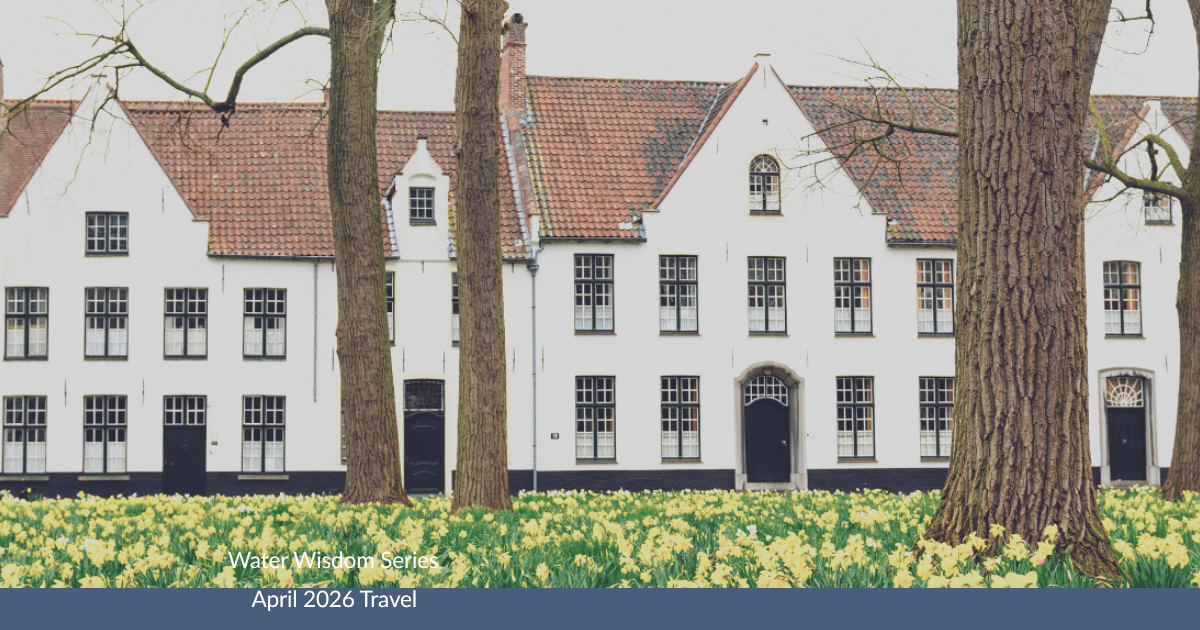
Haarlem’s prettiest gardens are its historic hofjes — hidden courtyard gardens behind residential doors. These serene, often medieval spaces feel like stepping into another century.
A hofje originally referred to charitable housing built around a shared courtyard. The idea came from the Seven Acts of Christian Mercy: feeding the hungry, giving drink to the thirsty, clothing the naked, burying the dead, sheltering the traveler, comforting the sick, and freeing the imprisoned. Some hofjes still serve their original purpose.
A few to look for:
Hofje van Bakenes (1395)
The oldest hofje in the Netherlands. If you can’t find the entrance, look for the green door. The houses date to the 17th century.

Prinsenhof Garden
A beautifully maintained garden behind the Prinsenhof building. The former medicinal garden (Voormalige Hortus Medicus) is tucked just west of the Grote Markt — part of the “Bavo to Bavo” self‑guided walk.

Founded in 1768 this beautiful amshouse and garden is a place we stumbled on while walking from the train station. It is famous for its elegant buildings, gardens and magnificent wrought iron gate.
Where to get the maps: Visit Haarlem website.

A Note on Almshouses in Holland
These hofjes and almshouses are among the most fascinating early charitable ideas in Europe — places built to provide dignified housing for widows and the elderly. Their beauty and simplicity are striking. Don’t miss them in Haarlem or Amsterdam.
Conclusion
Haarlem is the kind of place that stays with you — not because it overwhelms, but because it restores. It’s a city of quiet streets, world‑class art, hidden gardens, and gentle surprises. Whether you’re escaping Amsterdam for a day, chasing tulips in spring, or simply looking for a slower, more local rhythm, Haarlem offers a beautiful pause in the middle of a busy trip.
It’s a reminder that some of the most memorable travel moments are just a train stop away.
What does “Haarlem” mean? If you’re an American, especially a New Yorker, you may wonder. The word means “home on a sandy ridge.” The Dutch — great traders and explorers — founded Harlem in New York in 1658.
📌 Haarlem in a Day
📌 A Day Out in Haarlem
📌 Walking to the Frans Hals Museum
📌 A Charming Town Near Amsterdam
What’s Coming Next?
The Netherlands rewards travelers who look beneath the surface — sometimes literally. After a day in Haarlem’s quiet courtyards and canals, you start to notice how water shapes everything here: the streets, the rhythm of daily life, even the national character.
My next article explores that mindset — not as an engineering lecture, but as a cultural key that helps you understand every city you’ll visit.
Answer Yes. It’s quieter, charming, and only a short train ride from Amsterdam Central.
Answer Most visitors spend one and a half to two hours, especially if they enjoy Dutch Golden Age art.
Answer Many are, though hours vary. They are residential, so visitors should enter quietly.
Answer Yes. The historic center is compact and pedestrian‑friendly.
Answer Visit the Grote Markt, try a brown café, and sample local bakeries for Dutch pastries.
Happy digging (when you get home).
Jane
Photo Credits
Featured image, train station, hofje von Bakenes, Princenhof gardens, St Bavo church: Wikimedia Commons
Further Reading Before You Go
Articles
Your Dream Trip Along the Tulip Trail
Water Wisdom-how we use and live with our greatest natural resource.
Books
Why the Dutch Are Different — Ben Coates
Nicholas Brealey Publishing A witty, insightful introduction to Dutch culture and personality — ideal for travelers who want to understand the mindset behind the bikes, canals, and calm practicality.
Amsterdam: A History of the World’s Most Liberal City — Russell Shorto
Vintage A lively, narrative history that explains how Amsterdam became Amsterdam — trade, tolerance, water, and the spirit of independence.
The Edge of the World: A Cultural History of the North Sea — Michael Pye
Pegasus Books A beautifully written cultural history that places the Netherlands in its North Sea context — ideas, trade, and the shaping of northern Europe.
The Rhine — Ben Coates
Nicholas Brealey Publishing A light, engaging travelogue following the Rhine to its Dutch delta — perfect for readers who enjoy place‑based storytelling.
Tulipomania — Mike Dash
Three Rivers Press A fast, fascinating read about the tulip craze — especially fun for spring travelers and garden lovers.
The Diary of a Young Girl — Anne Frank
Everyman’s Library / Various editions A grounding, essential read before visiting Amsterdam — emotional, human, and deeply connected to place