
EXPLORE · AUGUST 2026

EXPLORE · AUGUST: THE PIVOT MONTH
August 10 — Color Quick Start: Your Fast Guide to Late‑Summer Color
August 17 — North–South Fall Gardening Kickoff: What to Do Now, Wherever You Live
August 24 — What I’m Planting This Week — Lettuce: A Simple Start to Fall Greens
August 31 — Late‑Summer Garden Reset: Preparing Your Yard for Septemberhttps://rootsandmaps.com/late-summer-garden-reset/

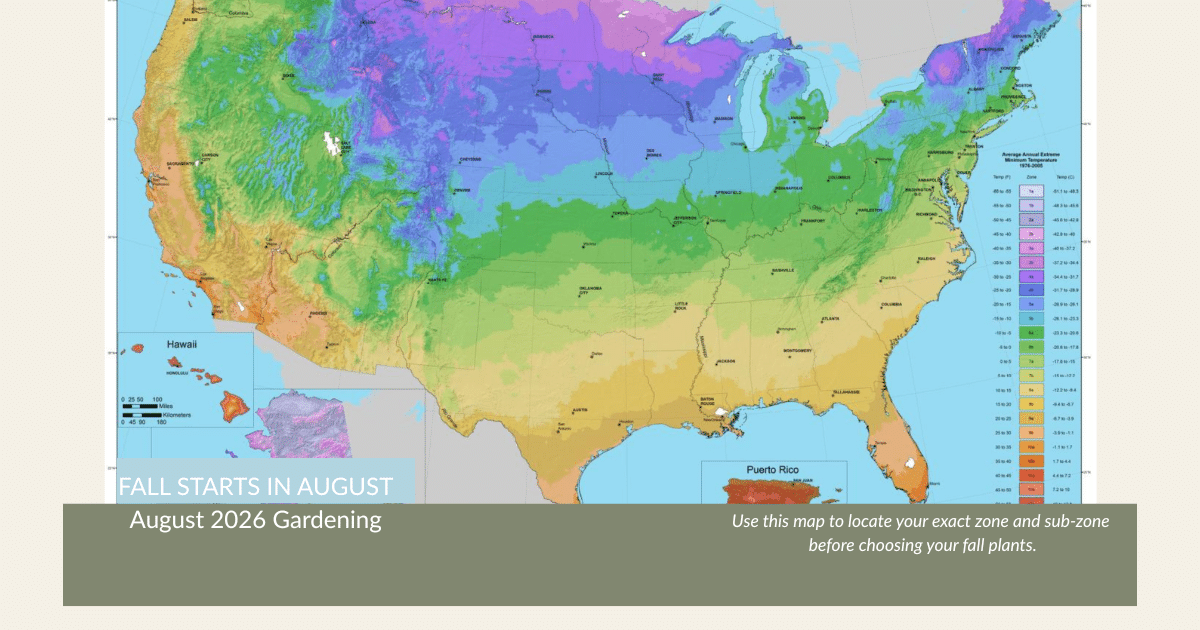
Use this USDA Plant Hardiness Zone map to locate your exact zone and sub‑zone before choosing your fall plants.
How to Use the New USDA Plant Hardiness Zone Map
This August garden color guide shows why August is the month in which things in the garden begin to shift to a new season and it happens in every region.
August is the pivot month. Summer is fading, and early fall is knocking at the door — but your garden doesn’t have to look exhausted. This is actually one of the most important planting windows of the year, and most gardeners miss it entirely.
Garden centers still have inventory right now, but the best fall performers — the early-blooming mums, the heat-tolerant asters, the show-stopping coleus — sell out fast. Waiting until September means settling for whatever’s left.
What we gardeners need in August is simple: fast color, heat-tolerant plants, and timing that actually matches our garden’s region. This guide gives us quick wins by zone. We can shop smart, plant right, and keep coor going well into fall.
Choose Your Region
Not all Augusts are created equal. A gardener in Minnesota is watching for frost. A gardener in Miami is still deep in summer. Your zone determines your strategy, so find yours below and go straight to your section.
Northern Zones 3–5 — short runway, frost comes early, act now
Midwest & Mid-Atlantic Zones 5–6 — warm days, cool nights, prime planting window
Southern Zones 7–9 — long runway, heat still intense, choose accordingly
Far South & Gulf Zones 9–11 — color lasts into December, tropical options open up
Mountain West Zones 4–7 — cool nights arrive fast, transitions happen quickly
Pacific West Zones 8–10 — dry heat dominates, irrigation is everything
Northern Zones 3–5 — Fast Color Before Frost
If you garden in the North, August is not a time to browse — it’s a time to move. The first frost in Zones 3–5 can arrive as early as late September, which means you have a narrow but very workable window right now.
Best Plants for Northern Zones:

Mums — Stick with early-blooming varieties. If the tag says “mid-season” or “late,” skip it. You need buds forming now, not in October.
Pansies & Violas — These are cold-weather champions. They’ll cruise through light frosts and actually look better as temperatures drop. Plant them now and they’ll carry your containers and beds right up to a hard freeze.
Ornamental Kale & Cabbage — Underused and underrated. The color on these actually deepens and intensifies as the nights get cold, making them more beautiful in October than they are in August.
Rudbeckia — Pure gold, fast blooms, and completely unfazed by heat or chill. If you want instant impact in a bed or border, rudbeckia is your answer.
Quick Wins for Northern Zones:
Buy tight buds, not open blooms — open flowers mean the plant has already peaked
Work compost into the planting hole for fast root establishment
Water deeply every 2–3 days until roots are settled, then back off
Midwest & Mid-Atlantic Zones 5–6 — Prime Planting Window
Zones 5–6 are sitting in the sweet spot right now. Warm days are still here to support root growth, but the nights are beginning to cool — and that cooling is exactly what the best fall plants need to hit their stride.
Best Plants for Midwest & Mid-Atlantic Zones:

Mums — Mid-season varieties are your target here. You have time for them to develop and fill out before peak color. Don’t rush to the earliest varieties; let them build.
Asters — Reliable, beautiful, and often overlooked. Purple and blue asters paired with gold or orange companions create some of the most striking late-summer combinations you can put together.
Sedum ‘Autumn Joy’ — Few plants earn the word “bulletproof” in gardening, but this one does. Drought tolerant, pollinator-friendly, and it transitions from pink to deep rose to rust across the season without any intervention from you.
Coleus-for all day every day foliage color that holds through frost. The burgundies, limes and variegated varieties work especially well as a backdrop or anchor in a container when blooming plants begin to fail.
Quick Wins for Midwest & Mid-Atlantic Zones:
Mix gold and purple for the most impactful fall contrast
Add ornamental grasses as a height element behind shorter bloomers
Pinch mums lightly to encourage a fuller, rounder shape — don’t wait until they’re already blooming
Southern Zones 7–9 — Heat-Tolerant Color
In Zones 7–9, summer is not finished with you yet. August temperatures are still intense across most of the South, which means your plant choices need to be built for heat — not just tolerant of it, but thriving in it.
Best Plants for Southern Zones:

Zinnias — They were made for this. High heat, direct sun, and dry spells don’t slow zinnias down. They bloom hard, attract pollinators constantly, and keep going until frost finally shuts them down.
Marigolds — Long bloomers with a proven track record in Southern heat. Gold, orange, and bicolor varieties all work. They also naturally deter certain garden pests, which is a bonus in late-season beds.
Lantana — One of the most effective pollinator magnets you can plant in the South. It handles heat and humidity without complaint, and the multicolor flower clusters add real visual depth to a border or container.
Celosia — For bold texture and color that doesn’t wash out in the sun, celosia delivers. The plume and cockscomb forms both work well, and the colors — deep reds, bright oranges, vivid pinks — stay saturated even in intense light.
Quick Wins for Southern Zones:
Water early morning only — midday watering in southern heat causes stress and disease
Mulch heavily to cool the root zone and retain moisture
Look for “heat-set” varieties specifically; these are bred to set blooms even when temperatures stay high overnight
Far South & Gulf Zones 9–11 — Color Into December
If you’re gardening in South Florida, coastal Gulf areas, or similar Zones 9–11 climates, your season doesn’t end in October — it barely slows down. August is still summer, but you’re planting now for a color runway that stretches well into winter.
Best Plants for Far South & Gulf Zones:

Vinca are tolerant of heat and humidity, low in maintenance and available in a good range of colors.
Begonias — Nonstop bloom is an accurate description. Wax begonias and the newer non-stop varieties handle the combination of heat, humidity, and afternoon rain that defines this region in summer and fall.
Tropical Hibiscus https://rootsandmaps.com/growing-tropical-hibiscus-some-essential-tips-for-new-florida-gardeners/— This is late-season show material. Large, vibrant blooms in sunset colors that last well into fall and winter in the Far South. Worth every inch of container or bed space.
Croton — When you want foliage drama, nothing in this zone competes with croton. The mix of reds, oranges, yellows, and greens in a single leaf makes it a natural anchor for any tropical combination.
Quick Wins for Far South & Gulf Zones:
Avoid overwatering — this climate’s humidity does more work than most gardeners realize
Switch to slow-release fertilizer now so plants are fed steadily through the fall season
Add shade cloth in periods of extreme heat to protect container plants on exposed patios
Mountain West Zones 4–7 — Cool Nights, Fast Transitions
Mountain West gardeners know that August can feel like summer by noon and fall by sundown. That temperature swing is actually your advantage — many of the best fall plants actively prefer it. The key is choosing varieties that can handle the pace of change.
Best Plants for Mountain West Zones:

Asters — Cool nights make asters pop. They’re built for this exact climate and will deliver consistent color as temperatures continue to drop through the fall.
Penstemon — Native to much of the Mountain West and perfectly adapted to the conditions. Late-season color, drought tolerance, and it comes back reliably year after year in the right zones.
Gaillardia — Heat during the day, cool at night, dry soil — gaillardia handles all of it. Bold red and yellow blooms that hold up without babying.
Ornamental Grasses — In the Mountain West, grasses earn their keep all season. They add movement, structure, and a textural contrast to fall bloomers that makes the whole planting feel more intentional.
Quick Wins for Mountain West Zones:
Water deeply but infrequently — shallow frequent watering produces shallow roots that can’t handle dry spells
Choose drought-adapted varieties whenever possible; they’re built for your soil and climate
Add gravel mulch to retain daytime heat in the root zone through cool nights
Pacific West Zones 8–10 — Dry Heat, Long Season
Pacific West gardeners are working with a long season and dry conditions. Irrigation is the deciding factor in August — get that right, and you have a wide window of opportunity ahead of you.
Best Plants for Pacific West Zones:

Salvias — Long bloomers that thrive in dry heat and draw pollinators from mid-summer through late fall. The purple and red varieties are especially effective in fall combinations.
Coreopsis — Drought tolerant and cheerful. Bright yellow and gold blooms that hold up in heat without heavy watering. Easy to maintain and reliable through the season.
Echinacea — Dependable color with strong structure. Echinacea handles the Pacific West’s dry summers well, and the seed heads that form after bloom add late-season interest for birds.
Sunflowers — For late-summer impact, nothing announces the season like a well-placed sunflower. Tall varieties create instant structure; shorter branching types give you more bloom over a longer period.
Quick Wins for Pacific West Zones:
Drip irrigation gives the best results — consistent moisture at the root zone without wetting foliage
Add compost to improve moisture retention in sandy or dry soils
Choose native or regionally adapted varieties whenever available; they’ll need less water and less intervention
Container Color for Every Region
Containers are the fastest way to add or refresh color anywhere in the garden, and in August they’re especially useful for filling gaps left by spent summer annuals.
Instant Color Combos That Work Everywhere:

Gold + Purple — Rudbeckia with asters. Classic, high-contrast, and effective in every region.
Burgundy + Lime — Coleus paired with sweet potato vine. Foliage-driven combinations that don’t depend on bloom timing.
Orange + Magenta — Zinnias with celosia. Bold, saturated, and heat-tolerant in warmer zones.

Container Tips:
Use fresh potting mix every season — old mix is compacted and depleted
Fertilize lightly every two weeks with a balanced liquid fertilizer
Water until it flows freely from the drainage holes — if it’s not draining, the roots are sitting in water
What to Avoid in August
Knowing what not to buy is just as important as knowing what to plant.
Plants already in full bloom — they’ve already peaked, and you’re buying the tail end of their season
Root-bound pots — roots circling the bottom of the pot are stressed plants that will struggle to establish
Anything labeled “late fall” in northern zones — it won’t have time to develop before frost shuts it down
Shop with your zone in mind, buy on the early side of the bloom cycle, and you’ll get the longest possible season from every plant you put in the ground this August.
Conclusion
Understanding your zone, your region, and the plants that thrive there is the single biggest advantage you can give yourself heading into fall. August isn’t a pause — it’s a pivot. When you know how your climate behaves, you stop guessing and start gardening with intention.
Your region’s heat curve, night‑temperature drop, and late‑summer moisture patterns all shape what will succeed in the weeks ahead. The plants we covered today — from early fall color to heat‑tolerant workhorses — are your first tools for building a garden that doesn’t fade in August but gathers momentum.
This is the foundation for everything that comes next in the fall series. Once you understand your region, the rest of August becomes a sequence of smart, well‑timed moves.

Up Next: The North-South Fall Garden Kickoff
Next week, we zoom out and look at the entire country at once. The North–South Fall Garden Kickoff breaks down exactly what each band — Northern, Midland, and Southern — should be doing right now to set up a strong fall season.
You’ll get:
- What to plant this week in each region
- How to use night temperatures as your timing signal
- The first steps in your fall readiness checklist
- Regional shortcuts that save time, water, and energy
If August 3 gave you the map, August 10 gives you the marching orders. I hope to see you on the 10th.
Happy Digging,
Jane
📌 AUGUST COLOR
Quick‑Start Guide For Every Region
📌 HEAT‑PROOF COLOR
Top Plants That Thrive In August
📌 INSTANT AUGUST IMPACT
Fast Ways To Add Color This Month
📌 SMART AUGUST PLANTING
What To Plant Now For Fall Color
Quick Answers
Q: How do I protect newly planted fall flowers from an unexpected early frost? A: Keep a few old bedsheets or lightweight frost cloth on hand once nights dip below 40°F. Cover plants before sundown, not after — you’re trapping ground heat, not blocking cold air. Remove the covering by mid-morning so plants don’t overheat. A single frost event doesn’t have to end your season.
Further Reading
Articles
- Fine Gardening — “Late‑Summer Color That Lasts” ( Region‑flexible picks that hold up through August heat and early fall.
- University of Minnesota Extension — “Annuals for Late‑Summer Color” Research‑based guidance for Northern zones (3–5) on dependable late‑summer color.
Books
- Planting: A New Perspective (timberpress.com — Piet Oudolf & Noel Kingsbury Foundational thinking on seasonal color flow and structure.
- The Well‑Tended Perennial Garden (timberpress.com ) — Tracy DiSabato‑Aust Classic late‑summer care and color‑extension strategies.