
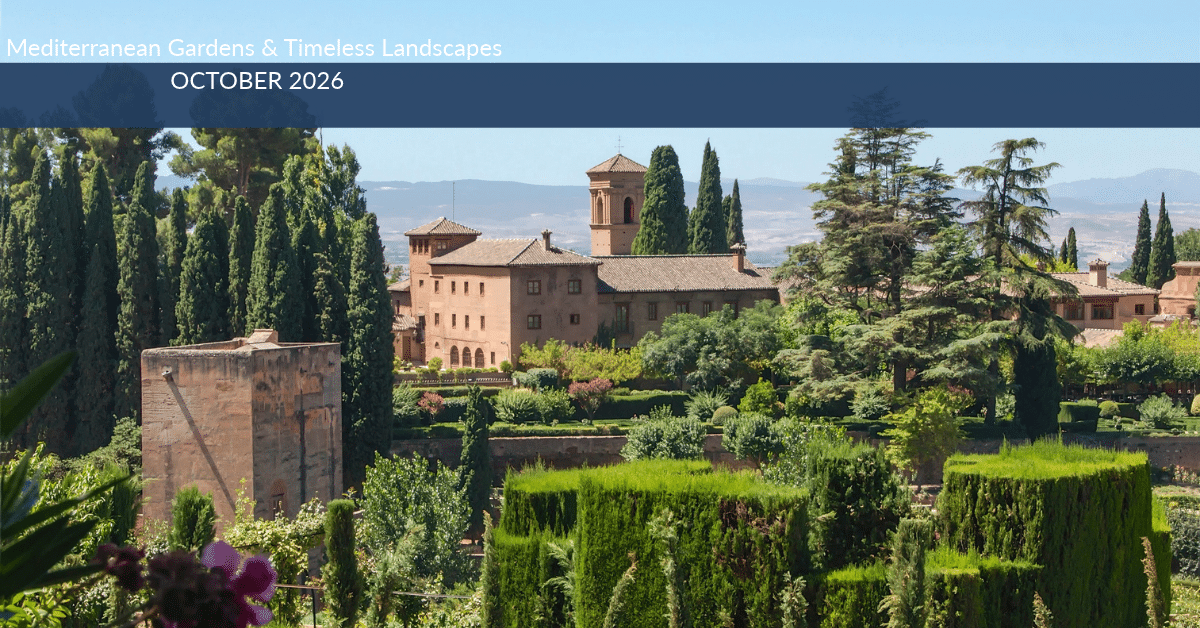
Introduction — Why Contemporary Mediterranean Gardens Matter Today

Across the Mediterranean, gardens have always been shaped by necessity: terraces built into hillsides, olives and citrus grown in thin soils, shade created with stone and pergolas rather than thirsty lawns. Today, that ancient logic feels newly modern. Designers across the region are returning to water‑wise planting, native shrubs, aromatic herbs, and climate‑adapted trees to build gardens that thrive in long summers and short winters.
These contemporary Mediterranean gardens are not nostalgic recreations; they are forward‑looking landscapes that blend ecology, design, and cultural memory. They show how the region is adapting to drought, heat, and changing seasons while preserving the beauty that has always defined Mediterranean life.
This article gathers eight of the strongest contemporary Mediterranean gardens, each in a different part of the region, so wherever you travel — France, Italy, Greece, Spain, Malta, or Israel; you can step into a modern garden shaped by centuries of Mediterranean wisdom.
Eight Modern Mediterranean Gardens to Visit
1. Domaine du Rayol: Provence, France

The benchmark contemporary Mediterranean garden, Domaine du Rayol is a living atlas of global dry‑climate landscapes. Designed by Gilles Clément, it blends ecology, artistry, and coastal drama.
What to See in the Garden
- Domaine du Rayol covers 20 acres of Mediterranean and global dry‑climate landscapes arranged as immersive “gardens of the world.” Visitors come for its coastal cliffs, aromatic plantings, and signature dry‑garden compositions. The Mediterranean Garden — olives, cork oak, euphorbia, rockrose — is the heart of the site. Don’t miss the Agave terraces, the Australian Garden, and the Canary Islands Garden, each showing how different Mediterranean‑climate regions solve water scarcity with design.
Where It’s Located
On the Var coast between Le Lavandou and Saint‑Tropez, the garden sits directly above the sea. It’s a 30–40 minute drive from Toulon and about 90 minutes from Nice Airport. Entry is generally €12–€14, with extended summer hours. Travelers often pair Rayol with Provence hill villages, Bormes‑les‑Mimosas, or coastal hikes along the Sentier du Littoral.
2. Parco di Villa Minelli — Veneto, Italy

A contemporary restoration that blends historic villa gardens with modern ecological planting, Villa Minelli is one of Italy’s most thoughtful Mediterranean‑climate landscapes.
What to See in the Garden
- The estate spans roughly 10–12 acres, known for its meadow systems, water‑wise borders, and preserved old trees. Visitors come for its Mediterranean woodland, geometric lawns, and quiet architectural moments around the villa. It’s famous for its landscape‑research mission, making it a model of modern Mediterranean stewardship.
Where It’s Located
Set in Treviso, about 30 minutes north of Venice, the garden is easy to reach by regional train or car. Entry is usually by guided visit with modest fees. Travelers often combine it with Venice lagoon islands, the Prosecco hills, or Treviso’s walled historic center.
3. Athens Riviera Coastal Parks — Athens, Greece

A contemporary reimagining of Greek coastal landscape, these parks stretch along the sea with native shrubs, salt‑tolerant plantings, and long promenades.
What to See in the Garden
- The redesigned waterfront spans dozens of acres of native Mediterranean shrubs, salt‑tolerant plantings, and broad pedestrian promenades. The palette leans on lentisk, olive, tamarisk, thyme, and sea lavender, creating a modern interpretation of Greek coastal ecology. Visitors come for long sea views, sculptural shade structures, and sunset gardens that glow in low light.
Where It’s Located
Along the Athens Riviera, about 20–30 minutes from central Athens by tram or taxi. Entry is free, with long daylight hours. Travelers often pair these gardens with the Stavros Niarchos Foundation Cultural Center, Flisvos Marina, or a coastal itinerary to Cape Sounion.
4. Costa Navarino Landscapes — Peloponnese, Greece

A large-scale ecological landscape that blends resort design with native Mediterranean planting and restored coastal ecosystems.
What to See in the Garden
- Costa Navarino’s landscapes cover hundreds of acres, though the designed garden zones feel intimate. They’re famous for water‑wise planting, restored dunes, olive groves, and native maquis vegetation. Visitors come for the Mediterranean orchard, stone‑terraced paths, and quiet ecological gardens that blend seamlessly into the coastal hills.
Where It’s Located
In Messinia, about 45 minutes from Kalamata Airport. Entry to garden areas is typically free for visitors within the resort zone. Travelers often combine Costa Navarino with Voidokilia Beach, Pylos, or archaeological sites like Ancient Messene.
5. Jardins de Laribal — Barcelona, Spain

A hillside Mediterranean garden on Montjuïc, Laribal blends terraces, rills, citrus, and shaded pergolas in one of Barcelona’s earliest public gardens.
What to See in the Garden
- Covering about 15 acres, Laribal is known for its terraced Mediterranean plantings, rills, fountains, and whitewashed pergolas. Visitors come for the citrus terraces, stone stairways, and cool shaded corners that reinterpret classic Mediterranean garden logic. It’s famous for its historic‑modern blend and its role in Barcelona’s garden history.
Where It’s Located
On Montjuïc Hill, reachable by funicular, bus, or a 20–25 minute walk from Plaça d’Espanya. Entry is free. Travelers often pair it with the Joan Miró Foundation, MNAC, Montjuïc Castle, or the Botanical Garden of Barcelona.
6. Buskett Gardens & Verdala Terraces — Malta

One of Malta’s few woodland-style Mediterranean gardens, Buskett offers stone terraces, carob groves, and dry‑garden plantings adapted to extreme summer drought.
What to See in the Garden
- Buskett spans roughly 30–40 acres, with stone terraces, carob and olive groves, and dry‑garden plantings. The nearby Verdala Palace terraces add a more formal architectural layer. The site is famous for its traditional Maltese landscape logic and its role in national festivals.
Where It’s Located
Near Rabat, about 20 minutes from Valletta by bus or car. Entry to the grounds is free, though palace interiors are not regularly open. Travelers often pair Buskett with Mdina, Dingli Cliffs, or Malta’s coastal archaeological sites.
7. Jardín Botánico Histórico La Concepción — Málaga, Spain

A blend of subtropical collections and Mediterranean dry‑garden zones, La Concepción is one of Andalusia’s most atmospheric historic gardens.
What to See in the Garden
- Covering 25–30 acres, La Concepción blends subtropical collections with Mediterranean dry‑garden zones. Visitors come for its historic palm avenue, water‑wise hillside plantings, citrus orchards, and seasonal Mediterranean borders. It’s famous for its 19th‑century romantic design and modern ecological additions.
Where It’s Located
Just north of Málaga, about 10–15 minutes by bus or taxi from the city center. Entry is typically €5–€7, with extended summer hours. Travelers often combine it with Málaga’s Alcazaba, Gibralfaro Castle, or coastal itineraries toward Nerja.
8. Jerusalem Botanical Gardens — Jerusalem, Israel

A research‑driven botanical garden with a strong Mediterranean section showcasing drought‑adapted shrubs, herbs, and rocky hillside planting.
What to See in the Garden
- Spanning 30 acres, the Jerusalem Botanical Gardens include a Mediterranean section with drought‑adapted shrubs, aromatic herbs, and rocky hillside planting. Visitors come for terraced Mediterranean slopes, seasonal wildflower meadows, and collections from other Mediterranean‑climate regions. It’s famous for its ecological research and regional plant conservation.
Where It’s Located
In the Givat Ram district, about 10 minutes from central Jerusalem by bus or taxi. Entry is typically ₪35–₪45, with long daylight hours. Travelers often pair it with the Israel Museum, Knesset, or day trips into the Judean Hills.
Summary — A Modern Mediterranean Story
Across the region, contemporary Mediterranean gardens share a common language: water‑wise planting, native shrubs, terraces, stone, shade, and aromatic herbs. Yet each garden expresses its own place — Provence’s cliffs, Greece’s coasts, Malta’s terraces, Spain’s hillsides, Israel’s rocky slopes. Together, they form a modern Mediterranean story rooted in ecology, culture, and design.
Photo Credits
Domaine du Rayol: Provence, France-Wikimedia Commons
Parco di Villa Minelli — Veneto, Italy-Wikimedia Commons
Quick Questions and Answers
Q: What defines a contemporary Mediterranean garden?
A: Contemporary Mediterranean gardens blend traditional regional plants with modern design, emphasizing clean lines, drought-tolerant landscaping, and strong connections between indoor and outdoor spaces.
Q: When is the best time to visit Mediterranean gardens?
A: Spring and autumn are usually the best seasons, offering mild weather, vibrant plant displays, and comfortable conditions for walking and photography.
Q: Are contemporary Mediterranean gardens water-efficient?
A: Yes. Many feature drought-tolerant plants, gravel pathways, efficient irrigation systems, and sustainable design practices suited to dry climates.
Q: What plants are commonly found in Mediterranean gardens?
A: Visitors often see olive trees, cypresses, lavender, rosemary, agaves, citrus trees, and other plants adapted to warm, sunny conditions.
Q: Can visitors learn garden design ideas from these destinations?
A: Absolutely. Contemporary Mediterranean gardens showcase practical ideas for water-wise planting, outdoor living spaces, and climate-adapted landscape design
Further Reading
- Mediterranean Garden Society
A leading resource for Mediterranean-climate gardening, water-wise planting, and notable gardens around the world.
https://www.mediterraneangardensociety.org [youtube.com], [mediterran…ociety.org] - La Louve Garden, Bonnieux, France
One of the most influential contemporary Mediterranean gardens, created by Nicole de Vésian.
https://provence-alpes-cotedazur.com/en/things-to-do/culture-and-heritage/places/la-louve-garden-bonnieux-en-2869389/ [provence-a…edazur.com] - Jardin de la Louve Overview
Background on the garden’s design and Mediterranean planting philosophy.
https://www.french-gardens.com/gardens/la-louve.php [french-gardens.com]
Recommended Books
Bringing the Mediterranean into Your Garden: How to Capture the Natural Beauty of the Mediterranean Garrigue
Olivier Filippi
Publisher: Filbert Press (2019) [filbertpress.com], [amazon.co.uk]
The Dry Garden
Beth Chatto
Publisher: Orion Books Ltd. [mediterran…rtugal.org], [mail.medit…rtugal.org]
Planting Design for Dry Gardens
Olivier Filippi
Publisher: Filbert Press. A practical guide to sustainable, drought-adapted planting inspired by Mediterranean landscapes. [filbertpre…espace.com]
Videos
Mediterranean Garden Society: Garden at Sparoza (Greece)
A short introduction to one of the world’s best-known Mediterranean demonstration gardens.
https://www.youtube.com/watch?v=ovNV5TzA0Ag [youtube.com]
La Louve, Bonnieux, France | The Gardenist
A tour of the celebrated contemporary Mediterranean garden created by Nicole de Vésian.
https://www.youtube.com/watch?v=m-YCERgeBGA
These should fit nicely into a concise “Further Reading” section at the end of your article.