
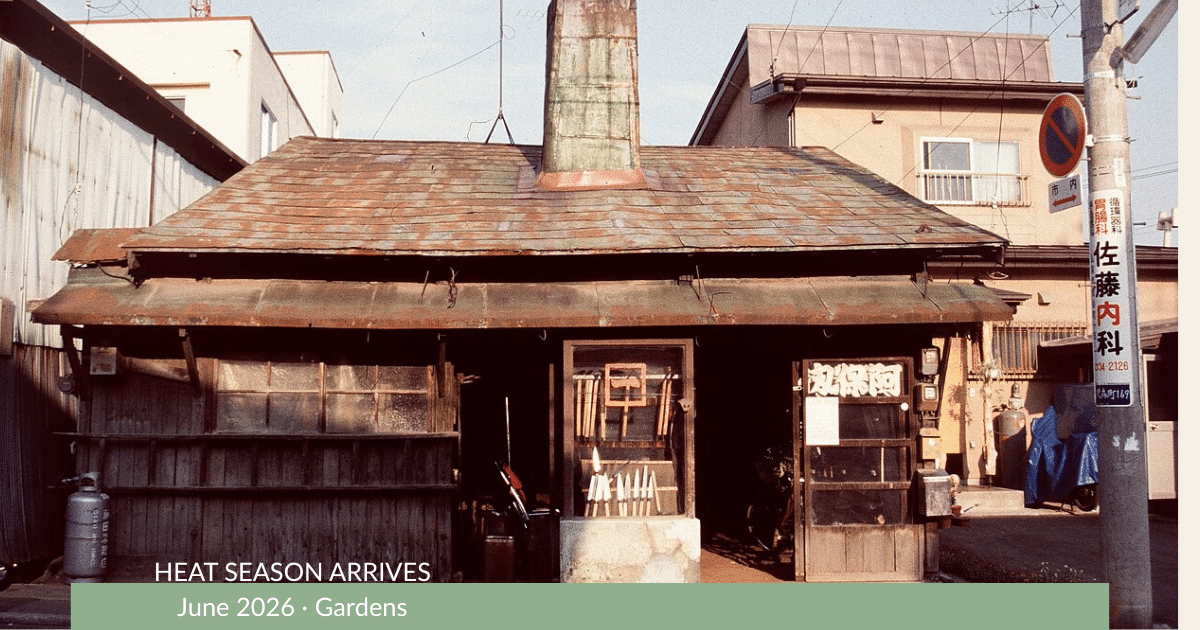
Garden Tools: What’s Worth the Money (and What Isn’t) A practical guide to the tools that truly earn their keep in everyday gardening.
Japanese Tools: The Real, the Imagined, and the Maybe Extraordinary Understanding what makes Japanese tools special — and which ones live up to the legend.
German Garden Tools Explained: Forged Steel, Ash Handles, and What Really Lasts A deep look at German craftsmanship and why these tools are built for decades of use.
Best Gifts for Gardeners: Useful Tools They’ll Actually Love Thoughtful, high‑quality tool gifts that gardeners will reach for again and again.
Retractable Garden Hoses: An Ergonomic Upgrade for Heat‑Season Watering A smart, ergonomic upgrade that makes summer watering easier and safer

Introduction
Japanese garden tools have a reputation that borders on the mythical — part craft, part story, part quiet precision. Some of that reputation is earned through centuries of metalwork and design; some of it is shaped by the way we imagine Japanese craftsmanship from afar. This guide looks at what makes these tools extraordinary, what’s simply good storytelling, and how to choose authentic Japanese‑made tools that truly perform in the garden.
Pick up a Japanese garden tool and something happens immediately: the balance shifts, the blade feels alive, the handle settles into your palm as if it has been waiting for you. There’s a precision to these tools that makes gardeners talk about them with a kind of reverence.
But why? And how much of that reverence is earned — and how much is mythology that grew up around them?
This is the story of Japanese tools: the real, the imagined, and the maybe extraordinary.
Why Japanese Tools Feel Different
If you’ve ever wondered who actually makes Japanese garden tools, here’s the full landscape: the big brands, the specialists, and the small blacksmiths. These are the names you’ll see most often, with easy English pronunciations.
Japanese tools come from a culture where craftsmanship is not a luxury; it’s a worldview. The blacksmithing traditions that shaped samurai swords also shaped garden blades. The same attention to edge geometry, steel hardness, and balance found its way into the everyday tools used for pruning, weeding, and shaping plants.
Three qualities define them:
- Precision — Edges are ground to fine, exacting angles. The cut is clean, not forced.
- Balance — Weight is distributed so the tool moves with you, not against you.
- Material honesty — Hard steels, simple handles, minimal ornament — nothing unnecessary.
These qualities make the tools feel almost intuitive, as if they’re teaching you how to use them.
Who Makes the Best Japanese Garden tools?
Japan’s garden tools come from a small circle of long‑respected makers, each with its own history, strengths,
and approach to steel. Some brands, like Okatsune and ARS, focus on reliable everyday tools; others, like
Tobisho or Toyama Hamono, still forge their blades in small regional workshops. Together, these Japanese
tool manufacturers shape the sharpness, balance, and feel that gardeners notice the moment they pick one up.W
List of Toolmakers
Niwaki (nee-WAH-kee)
- Modern brand curating traditional makers
- Known for: premium feel, balance, refined finishes
Okatsune (oh-kah-TSOO-neh)
- Long‑established manufacturer with a cult following
- Known for: unmatched edge retention, simple rugged design
Nisaku (nee-SAH-koo)
- Mass‑produced but reliable stainless and carbon tools
- Known for: affordable hori‑horis and digging tools
Tobisho (toh-bee-SHOH)
- Small artisan workshop in Yamagata
- Known for: hand‑forged secateurs with heirloom craftsmanship
Chikamasa (chee-kah-MAH-sah)
- Precision snip and floristry specialist
- Known for: lightweight, ultra‑sharp stainless snips
Toyama Hamono (toy-AH-mah hah-MOH-noh)
- Traditional forging workshop in Sanjo
- Known for: hand‑forged secateurs and classic garden shears
Doukan (DOH-kahn)
- Mid‑sized maker blending traditional and modern methods
- Known for: durable pruners and well‑balanced hedge shears
ARS Corporation (A-R-S)
- Engineering‑driven manufacturer with global reach
- Known for: extremely sharp, lightweight pruners and saws
Kikuwa (kee-KOO-wah)
- Specialist in fine bonsai tools
- Known for: delicate shears and precision snips
Kaneshin (kah-neh-SHEEN)
- High‑end bonsai tool maker with long tradition
- Known for: premium steel and exceptional precision
Silky (SILL-kee)
- World‑renowned saw manufacturer
- Known for: aggressive tooth geometry and fast, clean cuts
Raking can become a meditative pause in the garden, especially with a Karesansui rake—the short‑tined tool used in Japanese sand gardens. Its fine, closely spaced tines encourage slow, steady strokes that let your attention settle into the movement.
Japanese rakes come in a few simple forms, each shaping a different pattern language:
- Fine‑tooth rake — tight, delicate ripples
- Wide‑tooth rake — broad, flowing waves
- Mini detail rake — small accents and transitions

A quiet, meditative moment in the garden
The North American Japanese Garden Association publishes articles on the raked dry garden. Here is one of their articles on commonly used raked styles.
Who Japanese Tools Are Especially Good For
Not every tool suits every gardener. This chart shows who gets the biggest payoff from Japanese tools — and where they’re less ideal.
Precision‑Focused Gardeners
- Best tools: Chikamasa snips, Kikuwa bonsai shears, Kaneshin cutters
- Ideal for: thinning, shaping, deadheading, container gardening
Gardeners Who Prefer Heavy Tools
- Limitation: Japanese tools may feel too light for chopping or prying
- Better alternatives: Western digging spades, heavier forged hoes
Rocky or Hard‑Soil Gardeners
- Limitation: Light weight = less momentum in compacted or rocky soil
- Better alternatives: Western digging forks, mattocks, trenching shovels
Small‑Space and Container Gardeners
- Best tools: Chikamasa snips, Niwaki Mini Secateurs, Kikuwa shears
- Ideal for: tight spaces, balcony pots, raised beds
Pruning‑Heavy Gardeners
- Best tools: Okatsune 103, Tobisho A‑Type, ARS VS‑8Z
- Ideal for: shrubs, fruit trees, roses, regular maintenance cuts
Gardeners Who Value Craftsmanship
- Best tools: Tobisho, Toyama Hamono, Kaneshin
- Ideal for: those who appreciate hand‑forged steel and heirloom tools
Gardeners on a Budget
- Best tools: Nisaku hori‑hori, ARS snips, Okatsune 104
- Ideal for: reliable performance without premium pricing
Gardeners Who Want Low‑Maintenance Tools
- Best tools: ARS stainless snips, Chikamasa stainless series
- Ideal for: humid climates, coastal areas, gardeners who dislike oiling tools
Gardeners Who Need a Single “Do‑Everything” Tool
- Best tools: Nisaku hori‑hori, Niwaki GR Pro Secateurs
- Ideal for: minimalists, beginners, grab‑and‑go gardening
The Hori‑Hori Knife: A Multi‑Use Essential
The hori‑hori knife is one of those rare multi‑use tools that earns its place in the hand every season. Its serrated edge, depth markings, and pointed tip make quick work of planting, dividing, and cutting through stubborn roots. I use mine to plant more than a hundred caladium bulbs each spring, and it turns a big job into a steady, almost meditative rhythm.
The name itself comes from the Japanese word hori, meaning “to dig,” repeated for emphasis—something like “diggy‑diggy knife.” It’s a playful name for a tool that’s surprisingly capable, and its simple, purposeful design is a good example of how Japanese tools often combine utility with a touch of personality.

A versatile, multi‑use tool I rely on every day.
If You’re New to Japanese Tools, Start Here
(The Beginner’s Trio)
OKATSUNE 103 PRUNERS (oh-kah-TSOO-neh)
• The gold standard for everyday pruning
• Hard steel, simple design, legendary durability
• Ideal for: shrubs, perennials, small branches
ARS 120EU SNIPS (A-R-S)
• Lightweight, razor-sharp, effortless to use
• Perfect for flowers, herbs, vegetables
• Ideal for: deadheading, harvesting, fine detail work
NIWAKI GARDENING SHEARS (nee-WAH-kee)
• Beautiful balance with a refined feel
• Excellent for shaping, light pruning, and general garden care
• Ideal for: gardeners who want precision + comfort
Design Philosophy

The Creative Design Philosophy
Japanese tools often look unusual to Western eyes: asymmetrical blades, long narrow tines, scooped profiles, unexpected curves. But every shape has a purpose.
- The hori hori combines knife, trowel, and saw — a multitool before multitools existed.
- Niwashi weeders use leverage instead of force, ideal for tight spaces.
- Kama sickles cut with a pulling motion, which is more controlled and less tiring.
- Okatsune pruners rely on simple, ultra‑sharp blade geometry rather than complex mechanisms.
The creativity isn’t decorative; it’s functional. These tools evolved from centuries of working in small, intensively planted gardens where precision mattered more than brute strength.
What’s True — and What’s Mythology
Japanese tools have accumulated a halo of myth. Some of it is deserved; some is romantic storytelling.
True:
- The steel is often harder and holds an edge longer.
- Many tools are still made by small workshops using traditional methods.
- The designs are tied to specific gardening tasks.
- The balance and ergonomics are genuinely exceptional.
Myth:
- All Japanese tools are handmade.
- Hard steel never chips or rusts.
- A Japanese tool will automatically make you a better gardener.
- Copies are “just as good.”
Why Copies Fall Short
Some designs are easy to imitate. The shape of a hori hori knife, for example, is simple to reproduce. But the feel is much harder to copy.
Copies often fall short because:
- The steel is softer, so the edge dulls quickly.
- The blade geometry is less precise.
- The handle is heavier or poorly balanced.
- The tang is weaker.
- The tool looks right but doesn’t move right.
A hori hori copy will dig a hole. A real one will glide through soil and roots with less effort.
Where You Should Only Buy Japanese‑Made
Not everything needs to be authentic. But for certain tools, the difference is unmistakable:
Japanese Garden Tools: Brand‑by‑Brand Comparison
For these categories, Japanese‑made is worth it. For others — twine, gloves, scoops — buy what works.
Care & Storage
Japanese tools reward attention. Wipe blades dry, oil lightly after use, and store them out of humidity. Hard steel loves sharpness but hates neglect. A few seconds of care keeps the edge singing.
‘How to clean and sharpen your garden tools.’
What Gardeners Need to Know About Caring for Your Japanese Tools
Japanese garden tools are made from high‑carbon steel, which is sharper and harder than most Western stainless steel — but also more reactive. That means they reward simple, consistent care. You don’t need a drawer full of specialty products, but a few habits make a big difference.
The 5 Things That Actually Matter
1. Wipe the blade after each use
High‑carbon steel reacts with moisture, sap, and soil. A quick wipe with a rag prevents rust and keeps the edge clean. This is the single most important habit.
2. Oil lightly — but regularly
A thin coat of oil protects the steel and keeps sap from sticking. You can use:
- camellia oil (traditional, light, non‑gummy)
- mineral oil (cheap, widely available)
You don’t need brand‑specific oils unless you enjoy them.
3. Sharpen more often, but remove less metal
Japanese blades are harder and hold an edge longer, but when they dull, they prefer light, frequent touch‑ups rather than heavy grinding. A simple whetstone or diamond plate is enough.
4. Avoid soaking tools in water
High‑carbon steel + water = rust. If a tool gets muddy, rinse quickly, dry thoroughly, and oil.
5. Store them dry and open to air
Japanese tools aren’t magical, but they are deeply considered. They come from a culture that believes a tool should feel good, work beautifully, and last long enough to become part of your gardening life.
The myth may be romantic, but the reality is even better: these tools make ordinary tasks feel maybe extraordinary.
There’s a reason so many traditional Japanese homes include a porch or engawa facing the garden. After the digging, planting, pruning, and tending, we all crave that quiet moment to simply sit and admire the view. Whether it’s a borrowed landscape, a shaded corner, or a bed you shaped with your hori‑hori knife and Karesansui rake, the porch becomes the place where the garden reveals itself — slowly, softly, and just for you.

The perfect place to pause and admire the work you’ve done
Up Next: German Made Garden Tools
And while Japanese tools invite us to slow down and savor the work, the next chapter in this series takes us somewhere very different. German garden tools come from a culture that values engineering, precision, and the quiet satisfaction of a tool that performs flawlessly under pressure. If Japanese tools feel like an art form, German tools feel like a promise — built to take on real labor, season after season, without complaint.
In the next article, we’ll look at why so many serious gardeners reach for German steel when the job is demanding, the soil is stubborn, or the day calls for strength over subtlety.
Happy Digging,
Jane
📌 JAPANESE TOOLS · Built for Real Work
📌 PRECISION HAND TOOLS · Small, Strong, Essential
📌 TRADITIONAL DESIGN · Modern Garden Results
📌 CRAFTSMANSHIP · Tools That Last
Questions?
Photo Credits
Small Japanese Blacksmith works, 1985 Marie-Sophie Mejan, CC BY 4.0 , via Wikimedia Commons
Hand holding Hori Hori knife, Arthur Violy, CC BY-SA 4.0 https://creativecommons.org/licenses/by-sa/4.0, via Wikimedia Commons
Further Reading
Articles • Inside the World of Japanese Garden Toolmakers — Niwaki Editorial Team, Niwaki • The Craft of Japanese Bladesmithing — Master Shin Workshop, Master Shin Tool Co. • Why Japanese Steel Performs Differently — Hida Tool Editors, Hida Tool & Hardware Co.
Books • Japanese Woodworking Tools: Their Tradition, Spirit, and Use — Toshio Odate, Linden Publishing • The Art of Japanese Joinery — Kiyosi Seike, Weatherhill • The Unknown Craftsman — Sōetsu Yanagi, Kodansha International
Videos • How Japanese Garden Tools Are Made — Niwaki • Traditional Japanese Blacksmithing Techniques — Hida Too