
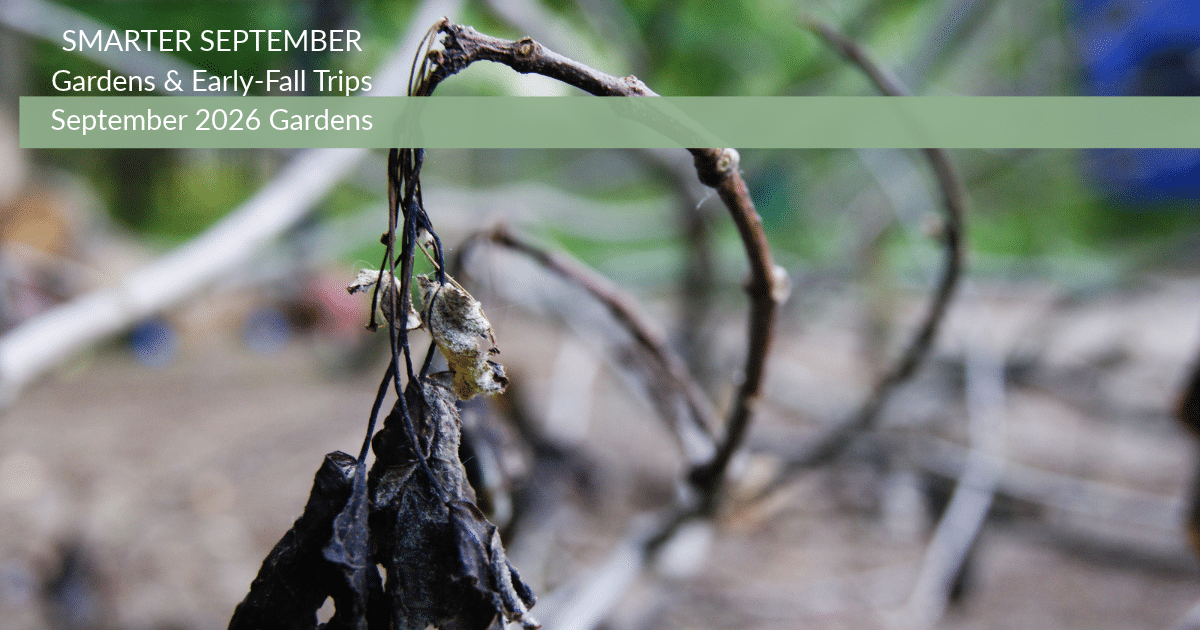
Explore This: Smarter September: Tidy Gardens & Early‑Fall Trips
Tidy Gardens: How Neat Is Too Neat,
Regional Gardens to Visit This Month
September Cleanup Details & Timing
Food‑Forward Trips for Early Fall.
EXPLORE · MODERN FALL CLEANUP

Modern Fall Cleanup: Smarter, Lighter, More Ecological A practical guide to what to cut, what to leave, and how to prepare your garden for healthier fall growth.
Why Less Tidy Can Work Better
Fall cleanup once meant stripping the beds bare, clearing every stem and leaf. We took pride in that clean and sparse space. Today, gardeners are rethinking that habit — and with good reason. Research shows that leaving more structure in place creates healthier soil, steadier moisture, and stronger wildlife support, all of which lead to more resilient gardens heading into winter. This modern approach doesn’t just change how your garden looks; it changes how it functions.
By understanding what to remove and what to keep, you’ll reduce erosion, protect roots from temperature swings, shelter beneficial insects, and set the stage for a smoother, more successful winter and early‑spring season. This guide will help you make smart, selective choices that strengthen your garden now and carry those benefits forward for months.
By understanding what to remove and what to keep, you’ll reduce erosion, protect roots from temperature swings, shelter beneficial insects, and set the stage for a smoother, more successful winter and early‑spring season. This guide will help you make smart, selective choices that strengthen your garden now and carry those benefits forward for months.
Thirteen Good Steps To Take
Fall cleanup doesn’t have to be a big project — in fact, the smartest approach is quick, selective, and focused on what truly matters right now. These 13 useful steps give you exactly what to do today to steady your garden for winter, protect your plants, and set up a smoother start to spring. Each one is simple, practical, and designed to make a real difference in just a few minutes outdoors.
If you’ve ever wondered how to get ahead of fall without stripping your garden bare, this list is your guide.
How We Got Here
The ecological shift behind modern fall cleanup
For decades, fall cleanup meant clearing beds down to bare soil. That tidy look felt responsible — a reset before winter. But research over the last 15–20 years has shown that this habit unintentionally removes the very materials that protect soil, shelter wildlife, and support spring growth.
Gardeners began noticing patterns: perennials struggling after harsh winters, soil crusting and drying faster, fewer beneficial insects returning in spring. As ecological gardening gained traction, the old “strip it bare” approach started to look less like good hygiene and more like lost opportunity.
Today’s fall cleanup is shaped by what we now understand about plant structure, soil biology, and overwintering wildlife. Leaving more stems, leaves, and seedheads isn’t laziness — it’s strategy. It preserves the architecture of the garden, protects the soil from heat and erosion, and supports the living systems that make a garden resilient.
The Ecological Issues This New Approach Addresses
Why leaving more material strengthens the garden
Soil Protection & Moisture Retention Leaf litter and plant debris act as natural mulch, shielding soil from sun, wind, and pounding rain. This reduces erosion, slows moisture loss, and prevents compaction.
Habitat for Beneficial Insects Many pollinators overwinter in stems, leaf litter, or just below the soil surface. When we remove everything, we remove their homes.
Organic Matter Cycling Plant material breaks down slowly over winter, feeding soil biology and improving structure.
Microclimate Stability Stems and seedheads create pockets of still air that buffer temperature swings.
Reduced Carbon Footprint Less hauling, bagging, and disposal means fewer emissions — and more nutrients staying onsite.
Life With Wildlife — And How to Stay in Control
Making the garden lively, beautiful, and manageable
A wildlife‑friendly fall cleanup brings the garden to life. Birds forage on seedheads, beneficial insects overwinter in stems, and small mammals find shelter in leaf litter. Gardeners often discover that this livelier landscape is more interesting — full of movement, sound, and seasonal texture.
But embracing wildlife doesn’t mean surrendering control. The key is selective editing:
- Keep structure that adds beauty — upright grasses, sturdy perennials, architectural seedheads.
- Remove material that causes problems — diseased foliage, invasive seedlings, anything blocking airflow.
- Shape beds intentionally — open crowded areas, define edges, and maintain clear paths.
- Monitor debris — tidy where needed, especially near entryways or high‑visibility areas.
- Support wildlife thoughtfully — leave some leaf litter, keep a few hollow stems, and offer water sources.
This approach creates a garden that feels alive but not unruly — a balance between nature and gardening.
Fall Garden Cleanup Methods Compared

How Much to Clean Up
A Numbered Task List — 13 Useful Steps You Can Take Today
1. CUT BACK ONLY WHAT COLLAPSES
[Keeps airflow steady and prevents rot in humid fall weather.]
- Quick tip — Cut after a rain; stems soften and come away cleanly.
2. LEAVE STURDY STEMS STANDING
[Protects overwintering insects and adds winter structure.]
- Helpful note — Leave stems thicker than a pencil; they hold up through winter.
3. REMOVE DISEASED FOLIAGE
[Stops fungal spread before cool nights lock moisture in.]
- Smart move — Bag and trash it — never compost disease.
IMAGE BREAK — PLACE IMAGE #1 HERE
4. CLEAR WEEDS NOW
[Prevents thousands of spring seedlings from erupting.]
- Easy method — Weed right after watering; roots slide out easily.

5. MULCH SELECTIVELY
[Stabilizes soil temperature and shields shallow roots.]
- Placement tip — Keep mulch off plant crowns; leave a small ring of space.
6. TRIM BACK FLOPPERS
[Reduces slug harborage and keeps moisture balanced.]
- Quick fix — Trim only messy outer growth; leave the center intact.
7. LIFT TENDER BULBS
[Saves tropicals before soil cools below safe thresholds.]
- Storage tip — Brush off soil and let bulbs dry for a day before storing.

8. DIVIDE OVERCROWDED CLUMPS
[Restores vigor and improves next year’s bloom.]
- Easy dividing — Use two garden forks back‑to‑back to split roots cleanly.
9. SHAPE FOR AIRFLOW
[Reduces fungal pressure during humid evenings.]
- Pruning cue — Aim for a loose “v” shape that opens the center.
10. PROTECT YOUNG SHRUBS
[Prevents freeze‑thaw root stress in early winter.]
- Shielding tip — Add a donut of mulch — never a volcano.
11. CUT BACK SPENT ANNUALS
[Removes pest harborage and frees space for mulch.]
- Cleanup trick — Pull annuals when soil is damp; roots release easily.

12. LEAVE GRASSES STANDING
[Provides wildlife shelter and winter interest.]
- Winter bonus — Their seedheads feed birds and catch beautiful frost.
13. TIDY EDGES ONLY
[Gives structure without stripping the beds bare.]
- Finishing touch — A crisp edge makes the whole bed look intentional.
Conclusion
A fall garden doesn’t need perfection — it needs intention. By taking these 13 simple steps, you’ve protected roots, steadied moisture, reduced pests, and given wildlife a place to shelter. You’ve also set yourself up for an easier winter and a stronger spring. Small actions add up quickly outdoors, and these are the ones that matter most. Step outside, do what you can today, and let your garden carry those benefits forward for months.

📌 SMARTER FALL CLEANUP
📌 WHAT TO CUT BACK NOW
📌 WHAT TO LEAVE FOR FALL
📌 A MORE INTENTIONAL CLEANUP
Up Next: Gardens to Visit this Fall
September is when the year finally tilts: summer’s intensity softens, travel crowds thin, and regional gardens start showing the first hints of fall structure. In this month’s feature, we’re heading into landscapes that reward early‑season curiosity — places where you can walk shaded paths, explore indoor conservatories on hot days, and pick up design ideas that translate directly back home. From food‑forward gardens to quiet regional gems, these September stops offer the kind of inspiration gardeners crave before the true fall rush begins.
Quick Questions and Answers
2. Should I remove all leaves from my garden beds? No — only remove thick, matted layers or leaves from diseased plants. A light layer of clean leaves can protect soil, conserve moisture, and support beneficial insects.
3. What plants should be cut back in fall? Cut back plants that are diseased, mushy, or prone to harbor pests. Leave seed‑bearing perennials like coneflowers and grasses standing for winter interest and wildlife support.
4. Is fall a good time to mulch? Yes — adding 2–3 inches of fresh mulch in fall stabilizes soil temperature, reduces winter weeds, and protects roots. Avoid burying plant crowns.
5. What tools do I need for fall cleanup? Essential tools include hand pruners, loppers, a rake, gloves, and a tarp or bin for debris. A leaf shredder or mower is helpful if you plan to mulch leaves for compost.
Further Reading
Articles
An Eco Focused Fall Garden Cleanup A Way To Garden
Pollinator Friendly Practices for Fall IFAS
Books
The Well‑Tended Perennial Garden by Tracy DiSabato‑Aust — A classic on pruning, seasonal care, and perennial maintenance.
The Garden Primer by Barbara Damrosch — A comprehensive, approachable guide to year‑round garden tasks, including fall cleanup
Video
Fall Garden Cleanup Tips (YouTube) https://www.youtube.com/watch?v=JwVtHkG8u1Y