
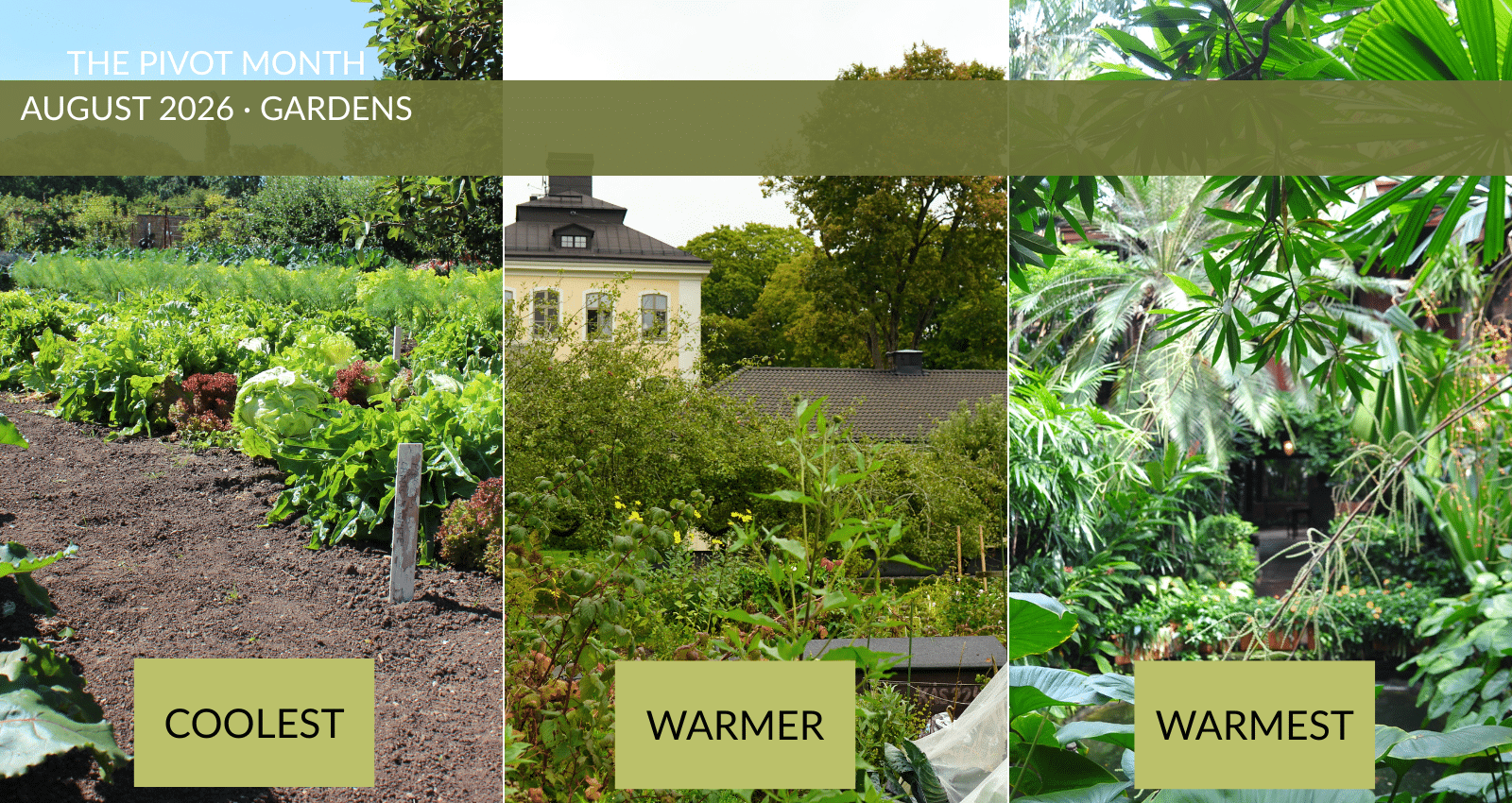
Explore August: The Pivot Month
August 10 — Color Quick Start: Your Fast Guide to Late‑Summer Color
August 17 — North–South Fall Gardening Kickoff: What to Do Now, Wherever You Live
August 24 — What I’m Planting This Week — Lettuce: A Simple Start to Fall Greens
August 31 — Lhttps://rootsandmaps.com/late-summer-garden-reset/ate‑Summer Garden Reset: Preparing Your Yard for September
Where summer ends, fall begins, and your decisions shape the season ahead
Why August Matters

August is the turning point between summer maintenance and fall preparation. The heat is still intense, but the days are already getting shorter, and plants are beginning to respond to that shift even if you don’t see it yet. This is the moment when smart gardeners move from “keep things alive” to “set up the fall garden.”
By August 10, most warm‑season crops are either in full production or beginning to tire. Soil dries out faster, pests multiply quickly, and stressed plants show symptoms almost overnight. But this same window is also when fall crops can be started with the highest success — if you time it correctly for your region.

If you know your climate and follow the right sequence, you avoid the most expensive gardening mistakes of the year: planting too early, planting too late, or planting the wrong things for your zone. August 10 is your checkpoint — the moment to assess what’s working, reset what isn’t, and prepare for the next season before the weather shifts.
August is when seasoned gardeners shift gears. Summer is still giving — but fall is already asking. If you want cold‑weather greens, root vegetables, and a garden that keeps producing well past the first chill, the planning starts now, not in September.
Use the worksheet below to map it all out: your USDA zone, your frost window, a crop‑by‑crop seed‑starting schedule, and a bed‑by‑bed layout grid. Fill it in as you read — your entries save automatically.
HOW TO GET AND USE THIS WORKSHEET
Download the Garden Base Map Worksheet above. Print it or open on a tablet.
For steps to take in garden design try this:’Design Your Beautiful Small Garden-11 Steps for Success.
WALK YOUR GARDEN — Note sun, shade, slopes, wind, and anything affecting plant performance. SKETCH YOUR SPACE — Outline beds, paths, structures, utilities. MARK MICROCLIMATES — Heat pockets, frost pockets, drainage differences. ADD THIS WEEK’S OBSERVATIONS — What’s thriving, struggling, surprising. SAVE THIS — You’ll use it again in September for plant placement.
2. What to Plant Now (By Region)
Your region determines what you can safely plant this week. The goal is to choose crops that can handle heat now but will thrive as nights cool.
Warm‑season regions can still plant heat‑tolerant crops and begin fall seedlings. Cool‑season regions are already transitioning into fall planting windows. Cold‑season regions are racing the clock and focusing on fast‑maturing crops that can finish before frost.
Planting now is about choosing varieties that can handle heat, mature quickly, or establish before cooler nights arrive. This is also the moment to think about succession planting — replacing tired crops with fresh ones that will carry you into fall.

3. Region‑Smart Planting Guide
Warm Regions (Zones 8–11)
Plant heat‑tolerant greens, late beans, okra, basil, and fall seedlings like broccoli, cabbage, and kale. These crops can handle August heat as long as soil stays consistently moist. Mulch heavily to protect roots and reduce evaporation. You can also start lettuce indoors to avoid heat‑stressed germination. Warm regions have the longest fall season, so planting now sets you up for months of harvest.
Cool Regions (Zones 5–7)
Plant fall greens, carrots, beets, radishes, and brassicas. Shade cloth helps seedlings establish in lingering heat. This is also the time to direct‑seed spinach for fall harvest and overwintering. Cool regions benefit from planting in waves — a few crops each week — to stretch the fall season.
The USDA Hardiness Zone Map divides the United States into regions based on average winter temperatures. This six‑map watercolor series breaks the country into clear climate bands so you can quickly identify your zone and choose plants that thrive where you live.
Cold Regions (Zones 3–4)
Focus on fast‑maturing crops and anything that can finish before frost.

4. What to Harvest Now
August is a peak harvest month — but only if you stay ahead of the heat. Tomatoes, peppers, cucumbers, squash, herbs, and beans are at their most productive. Harvesting regularly keeps plants producing longer and prevents overripening, which attracts pests.
In cooler regions, early potatoes, onions, and garlic may be ready. In warm regions, herbs can be cut back hard to encourage fresh fall growth. This is also the time to harvest and dry herbs before humidity or storms reduce their quality. A quick morning harvest can give you weeks of preserved flavor.
5. What to Start Indoors
Starting indoors now gives you strong fall crops later. Broccoli, cabbage, cauliflower, kale, and collards all benefit from indoor starts in August. These seedlings establish better when protected from heat and pests during their early stages.
Warm regions can also start lettuce indoors to avoid heat‑stressed germination. Cool and cold regions should start brassicas immediately to stay ahead of shortening days. Indoor starts give you a head start on fall — especially when outdoor conditions are unpredictable.

6. What to Prune, Cut Back, or Remove
August is the month to be decisive. Remove anything diseased, exhausted, or no longer producing. Plants that are struggling now rarely rebound in time to justify the space they occupy.
Cut back herbs to encourage fresh growth. Prune tomatoes lightly to improve airflow and reduce disease pressure. Remove spent annuals and prepare beds for fall planting. This is also the time to clean up pathways, refresh mulch, and eliminate hiding spots for pests. A tidy garden in August prevents major problems in September.
7. Troubleshooting: If You See This… Do This
Heat‑stressed plants
A. Check soil moisture first — dry soil needs deep watering; wet soil means stop watering. B. Provide afternoon shade using cloth or temporary barriers. C. Avoid fertilizing stressed plants; wait for cooler evenings.
Yellowing leaves
A. Rule out overwatering — the most common cause. B. Check for nutrient imbalance; add compost or a balanced fertilizer if needed. C. Inspect for pests hiding under leaves.
Blossom drop on tomatoes and peppers
A. Heat is the cause — not disease. B. Keep watering consistent. C. Wait for cooler nights; production will resume.
Powdery mildew
A. Remove affected leaves. B. Improve airflow by pruning. C. Water at soil level only.
Wilting even after watering
A. Check for root damage or pests. B. Mulch deeply to stabilize moisture. C. Water early in the morning only.
When you fix the cause — not the symptom — your garden recovers quickly. Most August problems are stress‑related, not disease‑related, and respond well to simple adjustments.
8. August Lawn Care (Region‑Smart)
Warm regions should raise mower height, water deeply, and avoid fertilizing in extreme heat. Cool regions can begin light overseeding and repair thin patches. Cold regions should focus on consistent watering and avoiding stress.
Across all regions, sharpen mower blades and avoid cutting more than one‑third of the grass height at once. A sharp blade reduces water loss and prevents disease entry points. If you’ve had fungal issues this summer, clean tools and avoid mowing when grass is wet
5. What to Start Indoors
Starting indoors now gives you strong fall crops later. Broccoli, cabbage, cauliflower, kale, and collards all benefit from indoor starts in August. These seedlings establish better when protected from heat and pests during their early stages.
Warm regions can also start lettuce indoors to avoid heat‑stressed germination. Cool and cold regions should start brassicas immediately to stay ahead of shortening days. Indoor starts give you a head start on fall — especially when outdoor conditions are unpredictable.
6. What to Prune, Cut Back, or Remove
August is the month to be decisive. Remove anything diseased, exhausted, or no longer producing. Plants that are struggling now rarely rebound in time to justify the space they occupy.
Cut back herbs to encourage fresh growth. Prune tomatoes lightly to improve airflow and reduce disease pressure. Remove spent annuals and prepare beds for fall planting. This is also the time to clean up pathways, refresh mulch, and eliminate hiding spots for pests. A tidy garden in August prevents major problems in September.
7. Troubleshooting: If You See This… Do This

Heat‑stressed plants
A. Check soil moisture first — dry soil needs deep watering; wet soil means stop watering. B. Provide afternoon shade using cloth or temporary barriers. C. Avoid fertilizing stressed plants; wait for cooler evenings.
Yellowing leaves
A. Rule out overwatering — the most common cause. B. Check for nutrient imbalance; add compost or a balanced fertilizer if needed. C. Inspect for pests hiding under leaves.
Blossom drop on tomatoes and peppers
A. Heat is the cause — not disease. B. Keep watering consistent. C. Wait for cooler nights; production will resume.
Powdery mildew
A. Remove affected leaves. B. Improve airflow by pruning. C. Water at soil level only.
Wilting even after watering
A. Check for root damage or pests. B. Mulch deeply to stabilize moisture. C. Water early in the morning only.
When you fix the cause — not the symptom — your garden recovers quickly. Most August problems are stress‑related, not disease‑related, and respond well to simple adjustments.

8. August Lawn Care (Region‑Smart)
Warm regions should raise mower height, water deeply, and avoid fertilizing in extreme heat. Cool regions can begin light overseeding and repair thin patches. Cold regions should focus on consistent watering and avoiding stress.
Across all regions, sharpen mower blades and avoid cutting more than one‑third of the grass height at once. A sharp blade reduces water loss and prevents disease entry points. If you’ve had fungal issues this summer, clean tools and avoid mowing when grass is wet
9. What NOT to Do in August
Do not fertilize heat‑stressed plants. Do not plant cool‑season crops in full sun without shade protection. Do not prune shrubs heavily — you may trigger tender new growth that burns. Do not overwater; it causes more problems than underwatering. Do not ignore pests — populations explode in August.
August is a month where small mistakes compound quickly. A little prevention now saves weeks of recovery later.
10. Your August Action List
• Water deeply and early. • Refresh mulch. • Start fall crops indoors. • Plant region‑appropriate crops outdoors. • Remove anything diseased or unproductive. • Harvest frequently. • Shade tender seedlings. • Check irrigation systems. • Prepare beds for fall planting. • Keep notes — what worked, what didn’t, what to adjust next year.
August rewards gardeners who stay ahead of the heat and prepare for fall before everyone else. Your timing this week sets up your entire next season.
Got your plan mapped out? Bookmark this worksheet and come back to it as the season shifts — it saves your entries right in the browser, so your fall garden blueprint is always exactly where you left it. And if you share your layout or seed list in the comments, we’d love to see what you’re growing.
Conclusion: Your Fall Garden Starts Here
August is the month when the garden quietly shifts gears. The heat is still here, but the light is changing, the soil is settling, and every small action you take now pays off for months. When you water with intention, clear out what’s spent, and start the first wave of fall crops, you’re not just maintaining your garden — you’re shaping the entire season ahead.
This week’s planning work gives you clarity, confidence, and a blueprint you can return to as the weather softens. Keep your notes close, adjust as you go, and trust the rhythm of the month. Fall gardening isn’t complicated; it’s simply well‑timed.
If you want, I can also refine this to match the exact cadence of your August Pivot Month series or adjust the tone to be more editorial or more conversational.

UP NEXT — What I’m Planting This Week: Lettuce
Next week, we pivot from planning to planting with one of the easiest fall crops to start in mid‑August: lettuce. Fast to germinate, forgiving in warm weather, and endlessly useful in the kitchen, lettuce gives you a quick win at the very start of the fall garden.
We’ll cover the four types that perform best in warm‑climate August gardens — looseleaf, romaine, butterhead, and crisphead — plus how to sow, shade, transplant, and harvest for crisp, sweet greens long before the rest of the cool‑season vegetables wake up.
If you’re ready for a simple, confidence‑building crop to kick off fall, lettuce is the perfect place to begin.
Happy planning — and happy planting.
Jane
Quick Questions and Answers
The August Pivot is the transition period when smart gardeners shift focus from maintaining summer crops to preparing the fall garden. While heat persists, shortening days signal the ideal time to clear exhausted plants, refresh mulch, and start cool-season crops before the weather cools.
f you live in a warm region (Zones 8–11), August is the time to plant heat-tolerant greens, late beans, okra, and basil directly outside. You can also start fall seedlings like broccoli, cabbage, kale, and lettuce indoors to protect them from the extreme late-summer heat during germination.
To protect tender fall seedlings from late-summer heat stress, consistently monitor soil moisture, mulch heavily to cool the roots and retain moisture, and utilize temporary afternoon shade cloth or barriers over your planting beds.
August is the prime time to start brassicas indoors, including broccoli, cabbage, cauliflower, kale, and collards. Starting them indoors protects the delicate seedlings from unpredictable outdoor heat and heavy late-summer pest pressure, giving them a strong head start.
Blossom drop on tomatoes and peppers in August is almost always caused by extreme summer heat stress, not disease. To help your plants recover, maintain highly consistent watering schedules and avoid applying fertilizer until the nights begin to cool down and production naturally resumes.
Further Reading
Articles
- Core Maps: The Permaculture Base Map – A practical guide exploring how to composite aerial drone photography with public topographical data for an accurate home-scale canvas.
- 6 Maps to Draw for Creating Your Own Permaculture Site Design – Breaks down exactly why the base map is the starting point before layering sun, sector, and water maps onto your landscape layout.
- Create a Base Map to Begin Designing a Garden – A straightforward, beginner-friendly look at mapping hardscapes, utilities, and boundaries using standard 1-inch-to-10-feet scales.
Books
- The Resilient Farm and Homestead by Ben Falk – An incredible blueprint for landscape design that covers site mapping, water flow, and analyzing microclimates in depth.
- Gaia’s Garden: A Guide to Home-Scale Permaculture by Toby Hemenway – The absolute gold standard for understanding how to observe your yard’s natural patterns and translate them onto a functional layout map.
Videos
- How to Draw a Property Base Map Using Google Maps – A highly practical video that teaches you how to pull satellite screenshots, scale them correctly, and trace them to form a perfect, low-effort property layout.
- Landscape Design For Beginners: How to Draw Your Layout – A great, visual walk-through detailing how to physically take field measurements and map permanent features from a bird’s-eye view.